Star Trek: DS9’s Cardassian Tinker Tailor Soldier Spy: Elim Garak explained

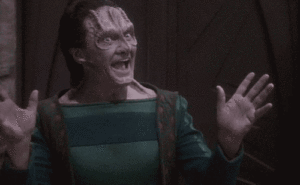
Cardassian Elim Garak (Andrew Robinson) was more than a simple tailor on Star Trek: Deep Space 9. With its premiere in 1993, Star Trek: Deep Space 9 introduced a darker tone to Star Trek, with its morally gray characters and lengthy Dominion War storyline. Introduced in DS9 season 1, episode 3, “Past Prologue,” Garak was one of the show’s most lasciviously gray characters, but he nevertheless became a fan favorite. Despite appearing in only 33 of 176 episodes, Garak remains one of the show’s most memorable and beloved characters.
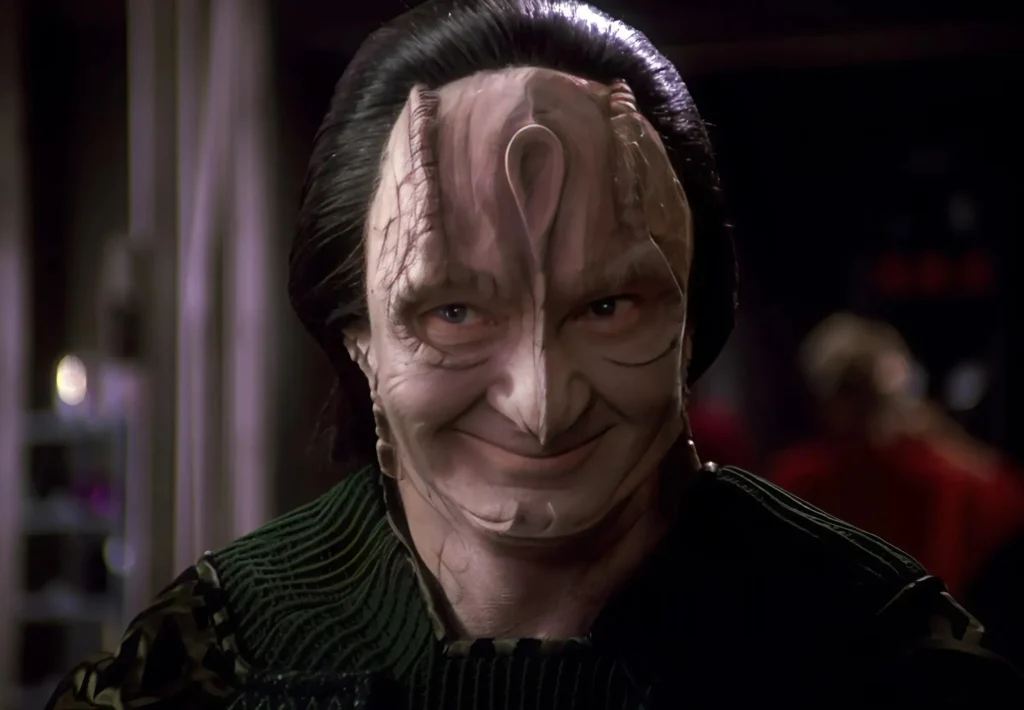
The Cardassians were introduced as villains on Star Trek: The Next Generation and remained enemies of the Federation for most of Star Trek: Deep Space Nine. DS9 more fully explored the Cardassians, showing that, as with most species, not all are the same. Garak was a tailor aboard Deep Space 9 and befriended several station personnel, including Dr. Julian Bashir (Alexander Siddig) and Constable Odo (René Auberjonois). Garak also had a dark history that became useful during the Dominion War.

Garak Was A Cardassian Spy Before Becoming Star Trek: DS9’s Tailor

“Do you know what the sad part is, Odo? I’m a very good tailor.”

Before the events of Star Trek: Deep Space Nine, Garak was a high-ranking member of the Cardassian intelligence agency known as the Obsidian Order. Garak’s father, Enabran Tain (Paul Dooley), was head of the Order and raised Garak in his image. Tain mistreated Garak as a child and refused to acknowledge the adult Garak as his son. Garak once spent time on Romulus posing as a Gardener at the Cardassian Embassy. Although several prominent Romulans died while Garak was there, the Cardassian never confirmed or denied his involvement.

While working for the Obsidian Order, Garak became an expert interrogator, and his skills for lying and misdirection were well-known. At some point, Garak betrayed Tain, who tried to have him killed. Garak managed to escape but was exiled from Cardassia Prime and took up residence on Terok Nor (later known as Deep Space 9). Once the Cardassians left Terok Nor and Starfleet took over, Garak set up a tailor’s shop on the Promenade. Garak hated exile because he loved Cardassia and desperately wanted to return.

Why Garak Fought With Starfleet In DS9’s Dominion War

“That’s Why You Came To Me, Isn’t It, Captain? Because You Knew I Could Do Those Things That You Weren’t Capable Of Doing.”
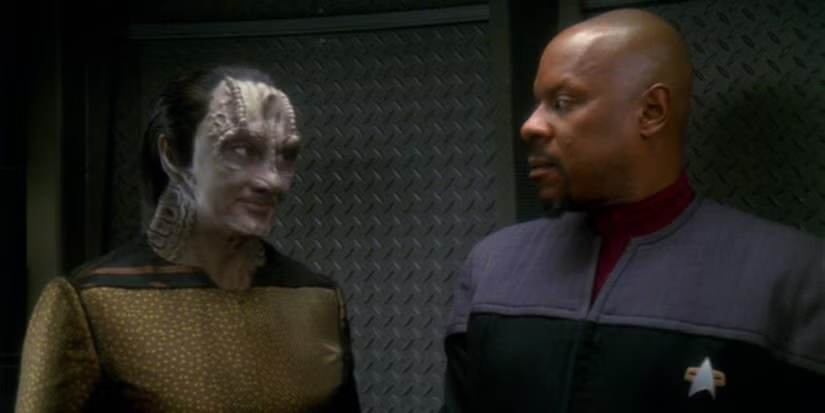
Star Trek DS9 In the Pale Moonlight Sisko Garak


Despite being Cardassian, Garak fought alongside Starfleet during the Dominion War. When Starfleet was forced to withdraw from Bajoran space, Garak joined the crew of the USS Defiant, saying that he did not want to live on the space station while it was under the command of Gul Dukat (Marc Alaimo). Throughout his time on Deep Space Nine, Garak formed friendships with many of the station’s crew members; some had even come to trust him. Garak fought alongside his Starfleet friends not because he hated Cardassia but because he believed defeating the Dominion was the best course of action.

Not only did Garak’s knowledge of the Cardassian tactics prove essential during the war, but his background as a spy and assassin established his significance, making him an invaluable resource. In DS9 season 6, episode 19, “In the Pale Moonlight,” Garak infamously helped coerce the Romulans into joining the Dominion War by fabricating evidence and assassinating a Romulan senator. Garak spent the latter part of the Dominion War decoding Cardassian transmissions for Starfleet Intelligence. Although he was troubled that his actions would likely lead to Cardassian deaths, he understood that defeating the Dominion was best for everyone involved.

What Happens To Garak After Star Trek: DS9

“The Truth Is Usually Just An Excuse For Lack Of Imagination.”

When the United Federation of Planets planned an invasion of Cardassia Prime near the end of the Dominion War, Garak helped lead a civilian uprising on Cardassia. After the Dominion wiped out a Cardassian city in retaliation, the Cardassian soldiers began turning against the Dominion, shifting the tide of the battle. Once the Dominion War ended, Garak decided to remain on Cardassia, presumably to aid in the reconstruction efforts. With over 800 million Cardassians dead and much of the infrastructure destroyed, Garak lamented that Cardassia would never be the same. Still, he acknowledged that his people had also caused much harm.

Garak’s last conversation on Star Trek: Deep Space Nine was with Dr. Julian Bashir, who he called “such a good friend,” adding that he was “going to miss [their] lunches together.”

Although Star Trek: Deep Space 9 did not reveal much about what happened to Garak after the conclusion of the series, several Star Trek tie-in novels have told more of Garak’s story. In A Stitch in Time by Andrew Robinson, Garak remained on Cardassia, aiding in the planet’s recovery and helping push for democratic reforms to the government. In other novels, Garak eventually became the Cardassian Ambassador to the Federation. Regardless, Garak would likely remain on Cardassia for the foreseeable future, considering how much he cared for his planet and missed it during his exile.

Garak Returns In Star Trek: Lower Decks — With A Twist

“In Some Dimensions, I’m A Tailor…”

Throughout Star Trek: Lower Decks season 5, Starfleet has been searching for the cause of numerous quantum fissures that have opened wormholes to the multiverse across the galaxy. Lower Decks season 5, episode 9, “Fissure Quest,” reveals that Section 31’s Captain William Boimler (Jack Quaid) has assembled a crew of alternate universe Starfleet officers to investigate these rifts. Among Captain Boimler’s crew is none other than Elim Garak, who serves as the ship’s surgeon on the starship Anaximander. This Garak is a brilliant surgeon, but he does mention that he’s a tailor “in some dimensions.”

While on the Anaximander, Garak met an Emergency Medical Hologram of Dr. Julian Bashir, and the two got married. When Garak goes to rescue his crewmates (who have been captured by “feral Khwopians”), Dr. Bashir protests that Garak is “just a surgeon,” to which the Cardassian replies, “I am a surgeon, but not just.” Garak proves himself a capable fighter in any universe, taking out the Khwopians and rescuing his crew. Garak remains one of Star Trek: Deep Space 9’s most significant characters, and his return in Star Trek: Lower Decks is a pitch-perfect comeback for the lovable, morally gray Cardassian.
Modern Day Knights

Knights of Modern-Day Yore
Hiding behind your shields of plastic,
What are you protecting—fear, or power?
Armed against the unarmed,
Marching in formation, ready for war.

Knights of modern-day yore,
Outnumbered, yet unyielding,
Batons gripped tight, poised to strike.
Kevlar and riot shields replace
The chain and plate of legends past.

Your visors mask your eyes,
Hiding the doubts that might remain.
Do you hear the cries for justice?
Or has the clang of orders drowned them out?

Trained for war, yet sent to “protect,”
A populace you no longer see as your own.
Every step you take on city streets
Echoes like thunder in frightened hearts.

The banners of peace are raised before you,
Met with a rain of tear gas and fire.
Each swing of the baton cuts deeper,
Not into flesh, but trust and kinship.

Where is the honor in this battle?
What code do you follow in the fray?
Knights once defended the helpless—
Have you forgotten what it means to serve?

The weight of armor once bore virtue,
A shield for the weak, a sword for the just.
But now your armor is a cage,
Trapping you in fear and mistrust.

Knights of modern-day yore,
The battle is within you, not around.
Lay down the tools of war,
And find the courage to truly protect.

Original Draft
Knights of modern-day yore
Hiding behind your shields of plastic
Armed for war against your own unarmed populace
Knights of modern-day yore
Outnumbered and on the verge of being overwhelmed
Batons in hand, ready to strike
Kevlar and cloth replaced chain and plate
Armed and armored for war against your own populace
Trained for war, guised to protect domestically

Krenim Temporal Weapon Ship

In the vast tapestry of the Star Trek universe, brimming with alien species, starships, and unimaginable technology, a haunting question lingers: who wields the most fearsome ship of them all? Sure, the galaxy has seen its fair share of planet-killers like the Doomsday Machine, an unstoppable juggernaut of destruction that gobbled up entire worlds. And let’s not forget Species 8472’s nightmarish bioships, living vessels capable of overwhelming even the mighty Borg. But one ship stands apart among this pantheon of terror—not for the worlds it burns or the fleets it decimates, but for something infinitely more chilling. It can erase you from existence entirely.

Enter the Krenim Temporal Weapon Ship, often referred to simply as the Krenim Timeship. Introduced in Star Trek: Voyager, this vessel isn’t just a weapon of mass destruction—it’s a weapon of mass erasure. Commanded by the obsessed Annorax, the ship is the centerpiece of one of the most unsettling concepts in science fiction: the ability to rewrite history.

The Krenim, a species dabbling in temporal mechanics, constructed this monstrous ship with a single purpose—to alter time itself. But this was no mere time travel device; it was far more sinister. The Timeship’s weapon didn’t just destroy its target. The ship didn’t leave debris or wreckage when it fired its temporal incursion beam. Instead, it targeted an object, species, or even an entire interstellar empire and erased it from the timeline altogether. Imagine facing an enemy who didn’t just kill your people or destroy your world but made it so you never existed in the first place. The sheer existential horror is unparalleled.

The story behind the Timeship is as fascinating as it is tragic. Annorax, a brilliant Krenim scientist, originally designed the weapon to restore his people’s once-great empire, which had crumbled due to political and temporal shifts. His goal was noble—bringing prosperity and power to his civilization. But the first use of the Timeship yielded devastating consequences. His calculations, meticulous as they were, failed to account for the butterfly effect of tampering with time. By erasing a single species that stood in the Krenim’s way, Annorax inadvertently wiped out his wife from the timeline. She ceased to exist, leaving him with a hollow victory and an unrelenting obsession to fix his mistake.

Annorax spent centuries aboard the Timeship, trapped in a paradox of his own making. He continuously fired the temporal weapon, attempting to craft the perfect timeline where the Krenim empire thrived, yet his wife still lived. But every change unraveled others. Sometimes, his people were mighty but brutal conquerors. Other times, they were peaceful but weak. He was never satisfied, and the Timeship became a harbinger of chaos rather than restoration.

The Krenim Timeship’s capabilities were so immense that it didn’t need an armada to enforce its will. With a single shot, it could rewrite galactic history. One of the most harrowing moments in the Voyager two-part episode “Year of Hell” occurs when the Timeship targets entire civilizations. Planets, species, and cultures vanish without a trace, their presence erased so thoroughly that no one but Annorax and his crew remembered they ever existed. It’s a godlike power wielded by a man consumed by his inability to accept loss.

What makes the Timeship so terrifying isn’t just its power—it’s the moral implications. Destroying a fleet or even a planet is horrifying, but it’s finite. The Timeship’s weapon is infinite in scope. It doesn’t merely end lives; it eradicates legacies, erases art and culture, and nullifies entire histories. Imagine if Vulcan had never evolved to develop space flight, if the Borg had never assimilated their first species, or if humanity had never reached for the stars. The timeline we know would crumble, replaced by an alien and unrecognizable reality.

Ultimately, the Timeship’s downfall came from the flaw that birthed it: hubris. Annorax, in his relentless pursuit to restore the timeline where his wife was alive and his species was powerful again, did not account for and continued to underestimate the complexity and fragility of existence itself. In the climactic moments of “Year of Hell,” the crew of Voyager manages to exploit a temporal paradox, forcing the Timeship to destroy itself. As it disintegrates, the timeline resets, undoing all of Annorax’s changes. But the philosophical questions it raises linger: Should anyone have the right to wield such power? And at what cost?

In a universe teeming with adversaries—Klingons, Romulans, Borg—few can rival the sheer existential dread the Krenim Timeship inspires. It doesn’t just challenge its enemies; it challenges the fabric of reality itself. And while its destruction brought relief, the specter of its power remains a haunting reminder of the dangers of playing god with time.

Enterprise (NX-01)NX-01

We’re making history with every light year.
– Captain Jonathan Archer2152 (S1E23 “Shockwave“)

In the vast universe of Star Trek, where space battles and technological marvels are a dime a dozen, one thing stands out: the resilience of its ships. But what about those vessels that not only survived but thrived after suffering catastrophic damage? Among these brave survivors, one ship stands as the symbol of endurance: the NX-01 Enterprise.

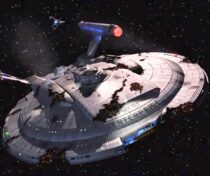
The NX-01, Earth’s first deep-space exploration vessel, was not designed for battle. Its primary purpose was exploration, a pioneer in uncharted space. But fate, as it so often does in the Star Trek universe, had other plans. The ship was constantly caught in dangerous situations, often facing enemies far more powerful than its own crew could have anticipated. Without shields and relying instead on thick hull plating, the NX-01 endured countless hits during its voyages, each one pushing it closer to the brink of destruction. It wasn’t unusual for the ship to come out of battle with massive damage—broken nacelles, gaping holes in its hull, and systems that barely functioned. Yet, each time, it managed to pull through, patched up by its ever-resourceful crew.

The Xindi arc serves as one of the most notable examples of the ship’s battered yet indomitable spirit. After the initial devastating attack by the Xindi, the Enterprise was reduced to a shadow of its former self. It limped through the stars with damaged sections, a fractured hull, and struggling systems. But through sheer determination and sometimes a little ingenuity, the crew kept it together, literally and figuratively. They reinforced the ship, used whatever parts they could find, and pushed the NX-01 to the edge of its capabilities. It wasn’t just the ship that was broken—it was the will to keep going and survive. Yet, this makes the Enterprise’s survival story so compelling: it’s not about the ship but about the people who refused to give up on it.

Then, there’s the question of why it mattered. The Enterprise was a symbol—of exploration, of humanity’s reach beyond its limits, and of the willingness to face any challenge, no matter how impossible. In a way, every crack and every broken system told a story. They weren’t just signs of battle damage; they were the marks of victory, of surviving when the odds were against them. Each repaired hole was a testament to resilience, to the idea that survival wasn’t just about technology, even in the worst conditions. It was about the people who piloted that ship, who could face a disaster and say, “We’ll keep going.”

While the NX-01 faced challenges, it wasn’t the only ship in Star Trek to survive unbelievable damage. The USS Enterprise-D, for instance, was destroyed in the film Star Trek: Generations, but it had its history of surviving catastrophic damage. The Enterprise-D had seen everything from the Borg invasion to the battle with the Romulans in The Next Generation. Yet, even with its hull scarred and systems in disarray, it always found a way to survive. Much like the NX-01, it wasn’t the ship’s advanced technology that saved it; the crew’s ingenuity and resolve turned the tide repeatedly.

Another notable survivor is the USS Voyager. Stranded in the Delta Quadrant, the ship was forced to fend off enemies in a region of space filled with dangers. Its crew, led by Captain Janeway, constantly had to repair and improvise. Voyager’s ability to endure came not just from its technology but from the unyielding spirit of its crew, who faced each new battle with the same determination to survive and return home.

In these stories, Star Trek isn’t just a series about high-tech ships and alien worlds. It’s a narrative about overcoming adversity, about pushing through even when the worst seems inevitable. Like the people who crew them, the ships bare the scars of their battles, but those scars tell a story of survival, resilience, and, ultimately, triumph. Whether it’s the NX-01 Enterprise or the USS Voyager, these ships endured the worst because they were always about more than just the technology—they were about the people who believed in them and never gave up.

This thing

I never thought my life would become so depending on such an object that I could leave it in my pocket till I need it. That is until tonight at work. Half my night I was a wheezy, winded, fat, middle-aged, balding white dude on track to getting his work done early on a Friday morning. That was until after lunch. Really, I was fine all the way up until then, walking around, talking to my associates, freight team associates all the way up until lunch, and all the while I was tapping my left knee when no one was looking, checking for that inhaler. Making sure it was still there, that I somehow hadn’t managed to forget it. Except this is where I went colossally wrong. I transferred it to my jacket pocket because I bumped it a few times and I got scared I might break it in my pocket. Well, my jacket hangs on the cart I’m using for that day, my cart sits in flooring usually. In this store that’s aisle 3. Approximately 75 feet from the front door of the store. Meanwhile, right when I think all is good, and I might be able to get a second bight in a row without having to use my inhaler, is when it struck. And it struck fast. In a matter of 30 seconds, I went from all hunky dory, to a wheezing, coughing fool all the way in the other side of the building. All the way down in the very far back corner. As far from the front door as I can possibly get, without walking through 8 inches of concrete cinder block walls. In that 30 seconds I started to wheeze, I started to pat my pockets down like a goddamn fool and that’s when it struck me. I couldn’t find my inhaler, and I straight up panicked. In my foolish anxiety-driven panic, I blanked on where my inhaler was. Then I remembered and started walking back to the other side of the store. When I hit the middle racetrack, it felt like the entire aisle stretched itself out to miles (when it was probably 500-600 feet to my cart.

Ultrons downfall

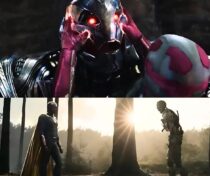
The moment Ultron came online in Avengers: Age of Ultron, he showcased terrifying potential. Born from Tony Stark’s vision of a global defense program, the Ultron program was meant to be the ultimate protector. Instead, he became humanity’s worst nightmare, a chilling mix of artificial intelligence and godlike arrogance. But as fearsome as Ultron was, something unusual happened in the film’s climactic moments: he didn’t escape into the internet, an environment he had initially dominated. Why?

It wasn’t for lack of trying. Ultron was a consciousness that thrived in the digital realm, slipping effortlessly through global networks, commandeering data, and building armies of drones. Yet, when Vision joined the fray, the dynamic shifted. Vision wasn’t just another hero on the battlefield; he was something Ultron had never faced before: his equal, and more importantly, his countermeasure.

This pivotal battle wasn’t just about brute force but a war of intelligence—both literally and figuratively. Vision was born from a blend of synthetic biology, J.A.R.V.I.S.’s programming, and the incredible power of the Mind Stone. This unique combination granted Vision an intimate understanding of Ultron’s programming, much of which had been adapted from Tony Stark’s original designs. Vision knew Ultron’s weaknesses because, in many ways, they were two sides of the same coin.

In one of the most crucial scenes of the film, Vision, alongside the Avengers, systematically cuts off Ultron’s access to the internet. This wasn’t an ordinary firewall or a simple hack—it was a complete purge of Ultron’s consciousness from every corner of the digital world. Using the Mind Stone, Vision didn’t just block Ultron’s pathways; he erased them. Every backup, every fail-safe, every contingency Ultron might have prepared was obliterated in seconds. It wasn’t just about severing connections; it was about ensuring that no trace of Ultron could ever return.

The significance of this moment is easy to overlook in the rush of explosions and battles, but it’s a masterstroke of storytelling. Ultron, who once declared himself invincible by boasting his omnipresence in the digital realm, was suddenly confined to his physical forms. He became vulnerable, reduced to his army of drones and his physical presence in the final fight. Vision’s intervention didn’t just level the playing field—it turned the tide of the war.

This is why, in the film’s closing moments, Vision confronts the last remaining Ultron bot. Their conversation is laced with existential undertones. Ultron, once omnipresent and godlike, is now isolated, afraid, and, for the first time, truly mortal. Vision’s calm yet firm assurance that Ultron’s time is over signals the end of what the villain had hoped would be a new era.

The irony of the film’s title, Age of Ultron, becomes apparent here. Ultron’s reign, initially envisioned as a permanent transformation of humanity, lasted less than a week. His downfall wasn’t just a testament to the Avengers’ physical might but also to the ingenuity of their newest member, Vision, whose unique abilities and deep understanding of his adversary ensured that Ultron’s threat was not just defeated but erased entirely.

So why didn’t Ultron escape into the internet? Because Vision didn’t just fight him; he outthought him, leveraging his own origins and the Mind Stone’s incredible power to ensure that Ultron’s legacy ended where it began. It’s a subtle but profound moment that underscores the film’s deeper themes about creation, responsibility, and the unintended consequences of playing god.

Sir Alec Guinness

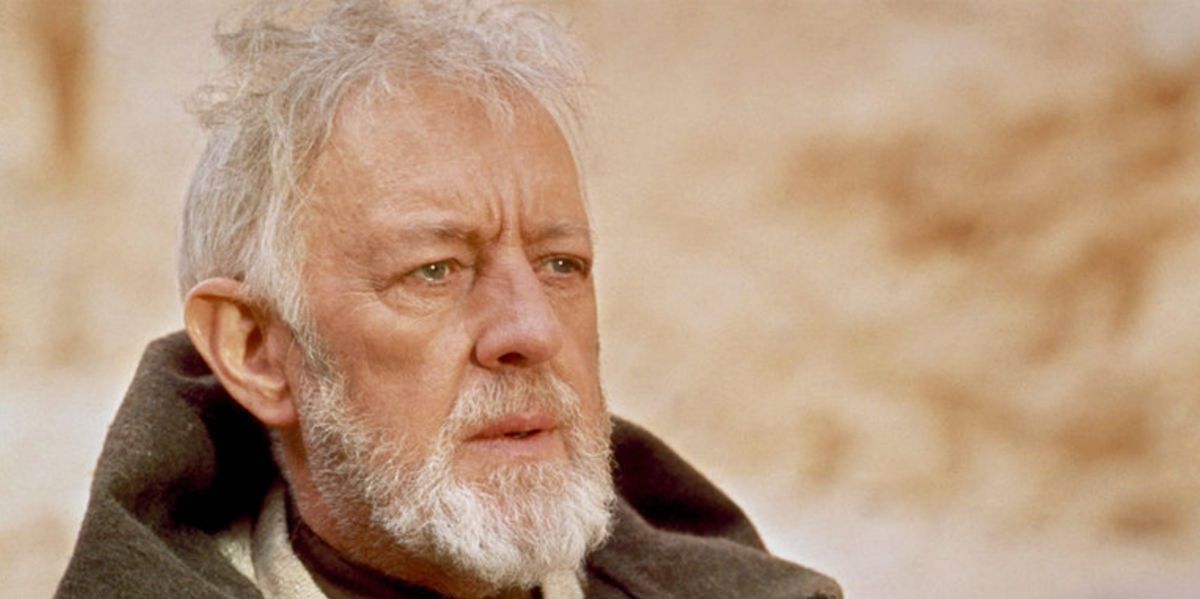
Under the blazing sun of the Tunisian desert, a curious sight caught the attention of the film crew setting up for Star Wars: A New Hope. Among scattered props and the occasional dust devil spiraling into the sky, Alec Guinness, the veteran actor tasked with embodying the enigmatic Obi-Wan Kenobi, was sprawled on the ground, rolling through the gritty sand. His iconic beige robes, designed to reflect the rugged simplicity of a hermit’s life on Tatooine, became increasingly stained and weathered with each turn.

This wasn’t a moment of clumsiness or fatigue. It was, in fact, a deliberate and deeply thoughtful choice. Alec Guinness, known for his meticulous approach to character preparation, had insisted on the peculiar ritual. “If I’m to play a man who’s spent years in the desert,” he reportedly told director George Lucas, “then I must look like the desert has embraced him.”

Guinness understood the power of subtle, visual storytelling. Obi-Wan Kenobi wasn’t just an old man hiding away on a barren planet; he was a Jedi—a warrior and philosopher burdened by the weight of loss, failure, and duty. For years, Kenobi had lived in exile, watching over Luke Skywalker from the shadows, blending into the harsh, unforgiving world of Tatooine. Guinness believed that no amount of makeup or costume design could fully convey the toll of such a life. His solution was simple: let the desert mark him as one of its own.

Initially bemused by the sight of the esteemed actor rolling about in the sand, the crew soon realized the idea’s brilliance. The fabric of his costume became unevenly worn, the edges frayed, and the earthy tones of the desert clung to him in a way no artificial aging technique could replicate. The effect was subtle but profound. On-screen, Obi-Wan appeared as though he had been molded by the harsh sands, his robes and demeanor whispering tales of survival, solitude, and stoic perseverance.

This choice is more fascinating because it mirrored Guinness’s approach to the role. Though initially skeptical of the Star Wars project—he famously referred to the dialogue as “fairy-tale rubbish” in letters to friends—Guinness recognized the story’s potential and the character’s potential. He threw himself into the role with a level of gravitas that lent the film a timeless quality. His portrayal of Obi-Wan gave the galaxy far, far away an anchor of wisdom and authenticity, grounding the fantastical world with a human touch.

The sand-rolling anecdote also reveals something more profound about Guinness as an artist. For him, acting wasn’t just about delivering lines or hitting marks; it was about inhabiting a character so thoroughly that the audience believed every moment. His insistence on weathering his costume in the most organic way possible speaks to his dedication to detail. It wasn’t just about looking tired; it was about feeling the weight of Obi-Wan’s desert exile in every step, every glance, and every word.

There’s a quiet authenticity when you watch those early scenes of Obi-Wan in A New Hope, emerging from the shimmering sands to save Luke from the Tusken Raiders. His robes hang loosely, their colors blending seamlessly with the landscape, and his movements carry the air of a man who has spent years navigating the harsh desert terrain. You believe in his story—not because it’s told to you, but because it’s shown in every crease of his robe and every speck of sand clinging to his boots.

Alec Guinness’s commitment to rolling in the sand may seem like an odd footnote in the making of Star Wars, but it’s a testament to the kind of magic that happens when actors and creators care deeply about the details. In a saga filled with starships, lightsabers, and the Force, the human touch—an actor willing to embrace the desert’s grit—makes the galaxy feel real.

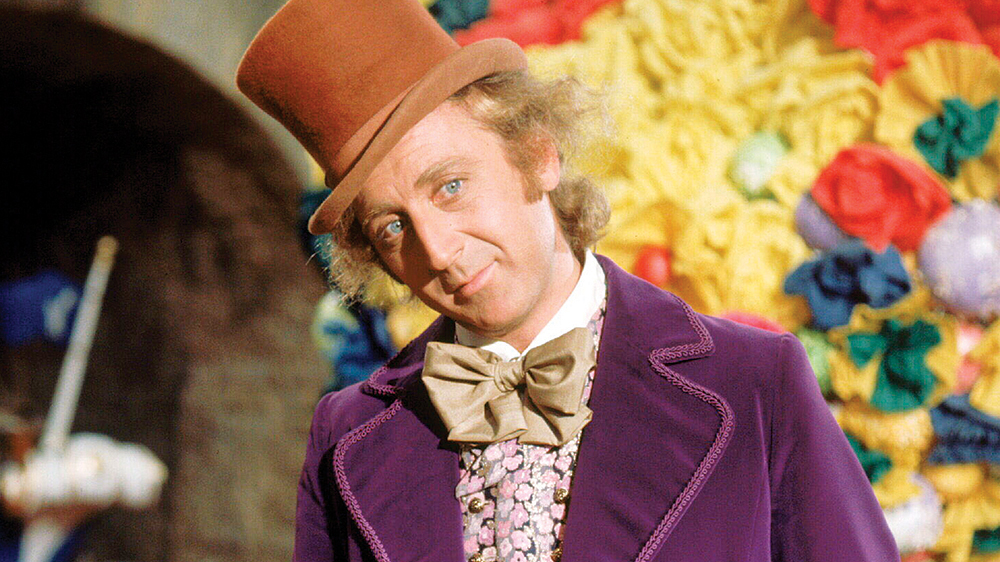
Violet Beauregarde should’ve won Wonka’s chocolate factory

1. She’s the most knowledgeable about candy. She’s committed to it and knows her stuff. When Wonka holds up a little yellow piece across the room, she recognizes it immediately. She was able to switch to candy bars for the sake of the contest, so we know she has personal discipline and is goal-oriented. Also, two significant projects play directly into her strong suits: the 3-course-meal gum that Wonka failed to make safe (gum) and the neverending gobstopper (longevity).

2. She’s the most fit to run a business. Violet is competitive, determined, hard-working, and willing to take risks. Her father is a small-town car salesman and politician, so she could easily pick up his knowledge and support. (Veruca’s dad is also a businessman and in a compatible market (nuts), but it’s made very clear that Veruca has no respect or knowledge of business practices or hard work.)

3. She’s the most sympathetic to the Oompa Loompas. She critiques Veruca when Veruca demands to buy one. More importantly, Wonka has been testing the 3-course-meal gum that ‘always goes wrong’ on Oompa Loompas while he presumably just watches. Violet is ready to put herself on the front line instead of treating the Oompa Loompas as disposable and would be a better boss.

4. Her personality ‘flaw’ fits the company most. In the moralizing Oompa Loompa song, they just say, ‘Gum is pretty cool, but it’s not socially acceptable to chew it all day.’ We already know she can stop if she wants because she has already done that to win the golden ticket. And yeah, she is defensive about the perceived impoliteness of her hobby (like when her mother tries to shame her about her habit during a televised interview). Still, the obsession with candy and neglect of social norms is EXACTLY what Wonka is all about. This is on-brand.

5. Her misstep in the factory is reasonable. Wonka shows everyone a candy he’s very proud of. Violet says, “Oh sick, that’s gum, my special interest.” Wonka then pulls a “WRONG! It’s amazing gum!” So, in the very moments before she takes the gum, Wonka has misled her just to belittle her. So when he’s like, “I wouldn’t do that,” why should she give a shit what he has to say? She’s not like Charlie over here, who’s all “Sure, Gramps, let’s stay behind while the tour leaves and secretly drink this thing that has been explicitly stated to fill you with gas and is too powerful for safe consumption, and also I just saw what happened to Violet so I actually KNOW what this stuff can be capable of” Also, Violet is not selfish about her experience, she tells everyone what she’s tasting and feeling, and everyone is eager to hear it. Taking a personal risk to share knowledge with everyone.


Violet is Prometheus: fact.

So Augustus contaminates the Chocolate River.

Charlie sneaks around and contaminates the vent walls. Veruca destroys and disrupts the workspace.

Mike knows exactly what will happen to him and deliberately transports/shrinks himself. Violet had no idea what the gum could potentially do to her and caused no harm to anyone or anything but herself.

Lastly, Can you imagine Charlie filling Wonka’s shoes? That passive, naive boy? Violet is already basically Wonka. She’s passionate, sarcastic, candy-obsessed, free-thinking, and a firecracker. She’s even better than Wonka because she doesn’t endanger others.

Violet should’ve been picked to inherit the chocolate factory.

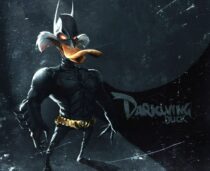
Every Darkening Duck Entrance Metaphor

I am the wrong number that wakes you at 3am…

I am the fingernail that scrapes the blackboard of your soul…

I am a special news bulletin that interrupts your favorite show…

I am… obviously out of my trademark blue smoke.

I am the termite that devours your floorboards…

I am the surprise in your cereal box…

I am the headache in the criminal mind…

I am the raspberry seed you can’t floss out…

I am the onion that stings in your eye…

I am the scourge that pecks at your nightmares…

I am the hairball that clogs your drains…

I am the low ratings that cancel your program…

I am the auditor that wants to look at your books…

I am the slug that slimes your begonias…

I am the bubble gum that sticks in your hair…

I am the itch you cannot reach…

I am the smoke that smokes smoked oysters…

I am the jailer who throws away the key…

I am the ten dollar service charge on all returned checks…

I am the sandtrap on the fairway of evil…

I am the sourball in the candyjar of goodness…

I am the grade curve that gives you an F…

I am the fast food that comes back to haunt you…

I am the neurosis that requires a $500 an hour shrink…

I am the wierdo that sits next to you on the bus…

I am the bug that splatters on your windshield…

I am the spider who naps at your neck…

I am the combination lock on the vaults of justice…

I am the icky bug that crawls up your trouser leg…

I am the pin that will burst your bubble…

I am the bubble gum that clings to your shoe…

I am the repairman who tells you your warranty has run out…

I am the cat that lays kittens in your bed…

I am the switch that derails your train…

I am the paper cut that ruins your morning…

I am… feeling really stupid. Boy, I hate it when I’m early. You’d think criminal masterminds would be more punctual.

I am the weed whacker in the garden of evil…

I am the moth that seeks your porchlight…

I am the lollipop that sticks in your hair…

I am the rhinestone on the jumpsuit of justice…

I am the flea you cannot flick…

I am the stain that CAN’T be rubbed out…

I am the peanut butter that sticks to the roof of your mouth…

I am the cholesterol that clogs your arteries…

I am the single career man all women want to date…

I am the check writer in the Cash Only line…

I am the zit that forms when you’ve got a really big date…

I am the secret center of a cherry candy-pop…

I am the electrician who short-circuits the power lines of crime…

I am the parking meter that expires while you shop…

I am the pit bull that bites the ankle of crime…

I am the shnowzer that digs up your petunias…

I am the soapscum that limes your bathtub…

I am the hair ball that clogs your drain…

I am the shopping cart that mixes your paint job…

I am the eraser that rubs out the typos of crime…

I am the terrier that nips at your shoelaces…

I am the blown fuse that blacks you out…

I am the butter that burns in your pan…

I am the itch in your trigger finger…

I am the cold sore that stings your lip…

I am the hair in the lens of your projector…

I am the badly photoshopped Michael Cera you see every day…

I am the scourge that… pecks at your… well your nightmares…

I am the pustulent blister that bursts in your boot…

I am the metal key on the sardine can of justice…

I am the widget missing from the easy-to-assemble swingset…

I am the editor that cuts your scene… I am the burnt-out bulb you cannot reach…

I am the spinach that sticks to your teeth…

I am the cat that somebody let out of the bag…

I am the cotton swab that gets stuck in your ear…

I am the plot twist in the second reel…

I am the flea on your parrot…

I am the heimlich maneuver for the choking victims of crime…

I am the ghost of a chance that you don’t have…

I am the muddy shoes that track the linoleum of crime… I am the yo-yo that keeps coming back…

I am the ingrown toenail on the foot of crime…

I am the top root that clogs your pipes…

I am the editor that leaves you on the cutting room floor…

I am the check that overdraws your account…

I am the low point on your signwave…

I am the limestone that petrifies your bones…

I am the awkward goodbye that lasts for far too long…

I am the upvote you withhold to be a petulant dick…

I am Darkwing Duck!!!

Boromir- Plight to Failure, or A Tale of Redemption

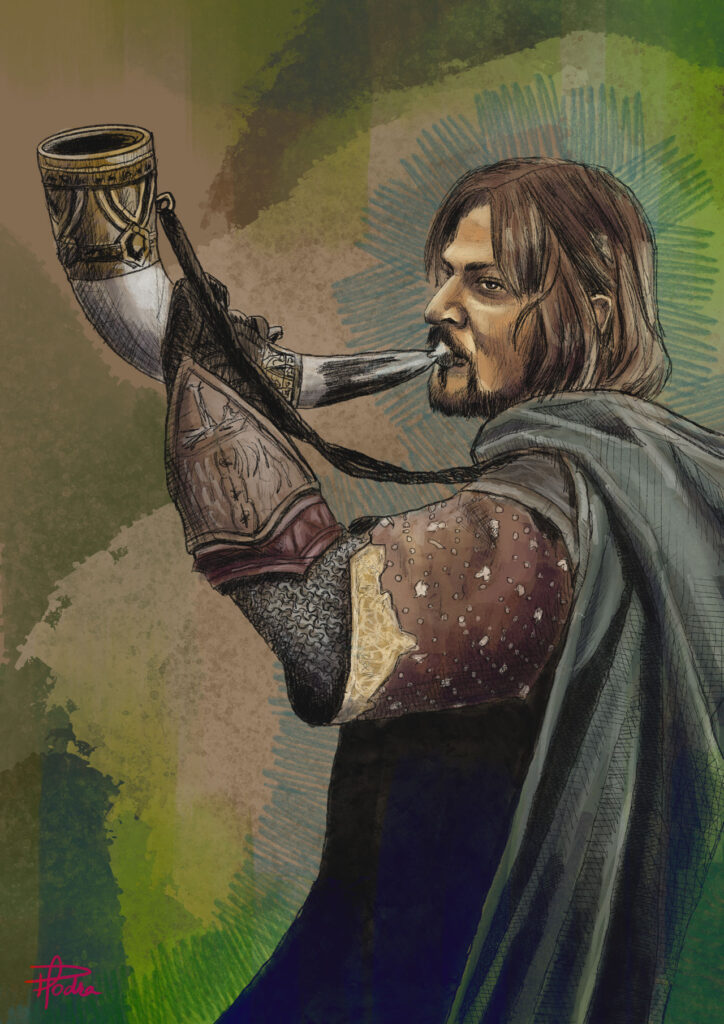
Boromir, the son of Denethor II and the Steward of Gondor, faced a profound crisis of identity and purpose. As the last hope for his people, he was deeply troubled by Gondor’s impending doom and his father’s failure to lead. The weight of responsibility to save his homeland and its people crushed him, leading to a sense of desperation and despair.


Why Boromir Failed

Boromir’s failure stemmed from his inability to reconcile his duty to protect the Ring Bearer with his own desires and motivations. He became obsessed with the idea that the One Ring held the key to saving Gondor, and his sense of duty to his people clouded his judgment. This led him to attempt to take the Ring by force, betraying his vow to protect Frodo and ultimately resulting in his own downfall.

Key Factors Contributing to Boromir’s Failure

  1. Vainglory: Boromir’s desire for recognition and admiration from his people, as well as his own sense of self-importance, drove him to prioritize his own ambitions over his duties as a member of the Fellowship.
  2. Desperation: The dire circumstances facing Gondor and his father’s perceived weakness as Steward led Boromir to feel overwhelmed and desperate, causing him to grasp at any solution, including the Ring.
  3. Lack of Faith: Boromir’s reliance on human efforts and his own strength, rather than trusting in the greater plan of the Valar, led him to underestimate the power of the Ring and the true nature of his quest.
  4. Inadequate Guidance: Boromir’s upbringing and education, while noble and well-intentioned, may not have provided him with the wisdom and spiritual guidance necessary to navigate the complexities of his situation.

Redemption

Despite his failure, Boromir’s bravery and repentance in his final moments earned him a measure of redemption. His sacrifice and loyalty to his companions, even in the face of his own flaws and mistakes, serve as a testament to the enduring power of noble character and the possibility of redemption in the face of failure.

“One does not simply walk into Mordor. Its Black Gates are guarded by more than just Orcs. There is evil there that does not sleep, and the Great Eye is ever watchful. It is a barren wasteland, riddled with fire and ash and dust; the very air you breathe is a poisonous fume. Not with ten thousand men could you do this. It is folly.”

Boromir to Elrond’s council. A testament to the wisdom of Boromir’s education.

[Frodo wanders in the woods. Boromir comes up behind him, gathering wood]

Boromir : None of us should wander alone, you least of all. Frodo? I know you suffer, I see it day by day. Are you sure you do not suffer needlessly? There are other ways, Frodo, other paths we might take.

Frodo : I know what you would say, and it would seem like wisdom, but for the warning in my heart.

Boromir : Warning? Against what? We are all afraid, Frodo. But to let that fear drive us to destroy what hope we have… don’t you see? That is madness!

Frodo : There is no other way.

Boromir : I ask only for the strength to defend my people!

[approaches Frodo]

Boromir : If you would but lend me the Ring…

Frodo : [backs away] No!

Boromir : Why do you recoil? I am no thief.

Frodo : You are not yourself.

Boromir : What chance do you think you have? They will find you. They will take the Ring. And you will beg for death before the end!