When a warp core’s about to breach, and the EPS conduits are glowing like a Christmas tree on fire, there’s one Starfleet officer who isn’t running to an escape pod or looking for a higher-ranking scapegoat. The Chief Engineer — that grease-stained genius with a tricorder in one hand and an anti-matter injector in the other — is already ten steps into a barely-legal workaround that’ll either save the ship or melt half the deck plating. These are Starfleet’s miracle workers, and frankly, no ship should leave space dock without one.
Let’s get something straight: Chief Engineers aren’t just technicians in coveralls. They are the unsung alchemists of the 23rd and 24th centuries, the fusion of physicist, mechanic, field general, and part-time magician. The position rose to prominence with the Constitution-class refit of 2245, where Starfleet finally admitted what fans had long suspected — the person keeping the warp engines from exploding probably deserves a seat at the senior staff table. These engineers don’t just fix things; they understand them on a molecular level and, more importantly, they improvise with flair when Starfleet specs aren’t enough.
Trip Tucker — bless his Southern drawl and zero tolerance for Vulcan condescension — set the prototype for the modern Chief Engineer: brilliant, temperamental, loyal to a fault, and never afraid to roll up his sleeves. Tucker didn’t just maintain NX-01’s systems; he practically raised them. That warp 5 engine was his baby, and like any good parent, he talked to it, coaxed it, and occasionally yelled at it when it misbehaved. He walked so future engineers could run — and occasionally quantum leap their way out of disaster.
Then there’s Montgomery Scott, the platonic ideal of Starfleet engineering. James Doohan, with his thick brogue and iconic “I’m giving her all she’s got,” gave us the first engineer who understood the drama. Scotty knew that timing was everything — not just in warp recalibration, but in television. Every fix was a suspense beat, a countdown, a near-miss. Behind the scenes, Doohan was inventing technobabble on the fly, helping to shape the very language of Trek science. He wasn’t just an engineer — he was a dramatist with a spanner.
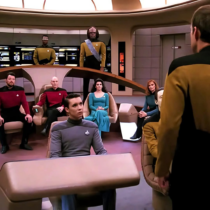
The role matured with Geordi La Forge, a man who brought a quiet, cerebral energy to the job. He wasn’t prone to shouting or overclocking the warp core out of ego. He solved problems with calm, compassionate logic — the kind of engineer who’d take apart a warp manifold while giving advice on romance. Despite early skepticism from veterans like Logan (a name remembered only for his misplaced arrogance), Geordi proved that technical brilliance doesn’t always shout — sometimes, it just sees things more clearly, visor and all.
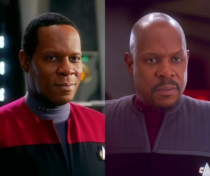
Miles O’Brien, of course, was the blue-collar workhorse. The guy you trust with your life because he’s probably already saved it six times today. O’Brien brought the rank of Chief Engineer down to Earth — or at least to Deep Space Nine — with a weary, “I really don’t have time for this” authenticity. His arc wasn’t just about fixing things; it was about coping with the cost of constant crisis. No holodeck therapy, no poker night — just another 12-hour shift patching Cardassian junk with Federation optimism.
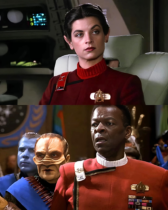
Then there’s B’Elanna Torres, who stormed onto Voyager with a scowl and a toolkit, daring Starfleet to question her hybrid identity or her methods. She was a brilliant engineer with a Klingon temper and a Starfleet brain, and her tenure was as much about emotional engineering as it was about warp coils. Her journey — from reluctant officer to one of the most trusted voices on Janeway’s bridge — added a rich layer to the archetype: the Chief Engineer as a character in flux, not just a fixer but someone being fixed.
Every Chief Engineer shares one sacred truth: the laws of physics are suggestions, and sometimes, the only way out is through pure ingenuity. These officers rewire their own fear into brilliance. They jury-rig, they invent, they rewrite the rules because they have to. When the shields are down, the captain’s unconscious, and the Romulans are one torpedo away from making your nacelles tomorrow’s salvage, the Chief Engineer isn’t panicking — they’re calculating. They are the plot twist.
So yes, call them miracle workers. But remember: miracles are just engineering problems with deadlines.