Best tng line

What’s your favorite line from Star Trek?
Well, I’m afraid that for all of the brilliant writing and performances, I must go puerile with this one, because it is so funny!

TNG, Season 1, Episode 8,

Not one of the best episodes of not one of the best seasons. The Enterprise crew takes shore leave on an idyllic planet populated by attractive, hedonistic people. (They boink a lot.)

The dilemma is that Wesley Crusher commits a minor infraction and is sentenced to death. That is the penalty for breaking any law.

The episode doesn’t stand up to much scrutiny; first of all, what were they doing on a planet that is clearly technologically primitive (Prime Directive, anyone)? And the Enterprise is shocked that there was no mention of the death penalty in the cultural information provided by the planet. (They didn’t think to ask about punishment for crimes?)

Still, it had one great line-Riker (who it is implied is about to join the fun) asks Worf about the situation, noticing the stern Klingon just watching.

“I am not concerned with pleasure, Commander; I am a warrior.”

“Even Klingons need love now and then.”

“For what we would consider love, sir, I would need a Klingon woman.”

“What about plain old basic sex? You must have some need for that.”

“Of course, but with the females available to me, sir – Earth females – I must restrain myself too much. They are quite fragile, sir.”

“Worf, if anyone else had said that, I’d suspect he was bragging.”

“Bragging, sir?”

Q and the Borg

Q’s decision to introduce the Enterprise-D to the Borg wasn’t just about giving Starfleet a warning-it was a wake-up call. While Jonathan Archer and the NX-01 had encountered cybernetic beings, their report likely didn’t raise the alarms it should have. Starfleet had seen plenty of strange encounters, and without the full context of the Borg’s true power and relentless nature, Archer’s logs would have been just another oddity filed away. The Federation already knew of various cybernetic life forms, from the Bynar, who integrate computers into their brains at birth, to human cyborgs serving in Starfleet. However, none of these prepared them for what was coming. By the 24th century, the Federation had grown comfortable—either making peace with old enemies or scaring off threats. Q shattered that illusion. His intervention forced Picard and his crew into direct confrontation with a species so powerful that, even after knowing what was coming, Starfleet still suffered catastrophic losses at Wolf 359. Had Q not intervened, the Federation might have assumed a single starship could handle an unknown vessel heading for Earth—after all, Archer’s NX-01 had managed to stop the Borg-linked beings in the 22nd century. But that would have been a fatal mistake. The real Borg were not a mere anomaly; they were an unstoppable force with a singular goal. If Q had remained silent, by the time the Federation understood what they were facing, it would have been too late. The Borg would have already reached Earth, Starfleet Command would have fallen, and the Federation itself would have been assimilated. Ironically, the being often seen as an antagonist was the very reason humanity had a fighting chance. Some fans even speculate that there exists an alternate reality where Q never issued his warning, and in that grim timeline, the Borg likely swept through the Alpha and Beta Quadrants unchecked. In the end, Q—whether he meant to or not—saved the Federation from its own complacency and gave them the gift of knowledge before it was too late.

He Took the Chair. The Crew Never Followed.

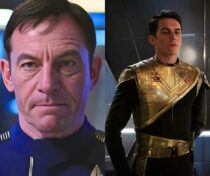
Captain Danby Connor was a male Terran Imperial Starfleet officer in the mid-23rd century, known for his mastery of poisons and strategic brilliance. His tactical prowess earned him numerous accolades, solidifying his reputation as a formidable figure within the ruthless Terran Empire.

During the 2250s, Connor served aboard the ISS Shenzhou under Captain Michael Burnham. When Burnham mysteriously vanished during a mission and was presumed lost, a fierce contest for command ensued. Connor, through determination and calculated moves, emerged victorious, securing his place as the new captain of the Shenzhou. However, despite his official rank, he found it challenging to command the same respect and unwavering loyalty that Burnham had effortlessly commanded. The crew remained wary, their allegiance never truly shifting in his favor, leaving him constantly struggling to reinforce his authority.

His tenure as captain took an unexpected turn when Burnham, now disguised as her mirror-universe counterpart, resurfaced. The mere sight of her reignited tensions, prompting Connor to make a bold move and confront Burnham in a turbolift. He sought to eliminate any threat she posed to his command, but the encounter did not go as he had planned. In the high-stakes confrontation, Burnham outmaneuvered him, sealing his fate in a way that would forever alter the course of the ISS Shenzhou’s command structure.

Behind the scenes, Connor was portrayed by Sam Vartholomeos, who originally played him as an ensign in the prime timeline. Unbeknownst to him, the role would evolve into something far more significant in the mirror universe. Recalling his surprise, Vartholomeos shared how he arrived on set in Toronto, only to discover that he was not just reprising his character but stepping into the boots of a captain. The shift from ensign to a hardened leader in the ruthless Terran Empire required a drastic transformation, which he embraced fully. “I took Ensign Connor’s ambition and twisted it into something darker,” he explained, molding his performance into one that reflected the cutthroat nature of the Terran way. Seeing his name on a trailer marked “Captain Connor” was a moment of realization—he was no longer just a young officer; he was now a commanding force in one of Starfleet’s most dangerous realities.

Coach Carter

“Our deepest fear is not that we are inadequate. Our deepest fear is that we are powerful beyond measure. It is our light, not our darkness, that most frightens us. Your playing small does not serve the world. There is nothing enlightened about shrinking so that other people won’t feel insecure around you. We are all meant to shine as children do. It’s not just in some of us; it is in everyone. And as we let our own lights shine, we unconsciously give other people permission to do the same. As we are liberated from our own fear, our presence automatically liberates others.”

  • Timo Cruz (Rick Gonzalez)

This quote is originally from the book A Return to Love: Reflections on the Principles of a Course in Miracles by Marianne Williamson.

Q Blinked First

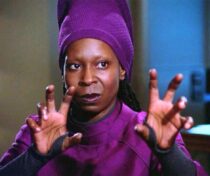
The tension between Q and Guinan, two of the most enigmatic figures in the Star Trek universe, has captivated fans for decades. When Q steps onto the Enterprise and encounters Guinan, his usual arrogance gives way to unease—a rare crack in the facade of an omnipotent being who bends reality with a snap of his fingers. Why would Q, a member of the all-powerful Q Continuum, fear Guinan, the serene and unassuming bartender of the Enterprise? What secrets lie beneath her calm exterior?

To unravel this mystery, we must first examine their interactions in the episode “Q Who,” Q’s reaction to Guinan is striking. His bravado evaporates, replaced by defensive body language and visible agitation. When Guinan raises her hands in an almost mystical gesture, Q recoils as if anticipating an attack from this woman. Clearly, he recognizes her. His reaction isn’t just mere theatrics; it’s instinctive fear. Yet, Q has faced down entire species, including the Borg, without flinching. What could Guinan possibly possess that unnerves him so profoundly?

Guinan, as an El-Aurian, is no ordinary being. Her species, known as “listeners,” are uniquely sensitive to the fabric of time and space. El-Aurians can perceive temporal anomalies and cosmic disturbances, but Guinan’s abilities extend beyond those of her kind. She not only senses the presence of the Q but engages them with an authority that suggests a history of encounters. Her cryptic remark, “Not all the Q are alike. Some are almost respectable,” hints at a nuanced understanding of the Q Continuum. She has clearly crossed paths with other Q, possibly forging alliances—or rivalries—long before her time on the Enterprise.

The hints about their shared history become even more intriguing when we learn that their interactions date back to the 19th century on Earth. During this period, Guinan was not yet known by her current name, and her role remains shrouded in mystery. Could she have been a disruptor to Q’s plans, a thorn in his side during a pivotal moment in galactic history? Q’s description of her as “an imp” who brings trouble wherever she goes suggests that Guinan is far more than a passive observer. Guinan may have, in fact, actively opposed Q, perhaps even thwarting his schemes in ways that left a lasting impression.

But what could Guinan have done to instill such fear in an immortal being like Q? The idea of Q fearing physical harm seems absurd—he is, after all, omnipotent. Yet, what if the threat wasn’t physical? Guinan might possess knowledge or abilities granted by higher powers, possibly even other members of the Q Continuum, to counter Q’s chaos. The Continuum is known to regulate its members, preventing them from tipping the cosmic scales too far. Guinan could represent a safeguard, a counterbalance to Q’s unchecked meddling. Her calm demeanor and wisdom starkly contrasted with Q’s love of disorder, making her a natural foil to his antics.

Their dynamic is not merely a clash of individuals but a collision of philosophies. Q thrives on chaos, testing the boundaries of morality and existence, while Guinan embodies order, compassion, and wisdom. She serves as a moral compass for those around her, offering guidance and insight in the face of uncertainty. When Guinan stands against Q, it’s more than a personal confrontation—a battle between chaos and order, caprice and compassion.

The mystery deepens when we consider Guinan’s identity. She reveals that her name is not her proper name, hinting at a deeper, hidden identity. Combined with her agelessness and cryptic comments, this suggests a past steeped in secrets. Could she be more than just an El-Aurian? Might her origins tie into ancient cosmic forces that predate even the Q Continuum? The possibility is tantalizing, raising questions about her true nature and the extent of her power.

Ultimately, Q’s fear of Guinan reflects her unknown potential. For a being like Q, who is omniscient and unchallenged, the unknown is the only thing that can inspire true terror. Guinan embodies the paradox of quiet power—a figure who doesn’t need to boast or display her might but whose presence alone commands respect. What she knows, what she’s capable of, and what she represents remain shrouded in mystery. But one thing is sure: when Q sees Guinan, he doesn’t see a bartender; he considers a reckoning.

Star Trek VI: The Undiscovered Country

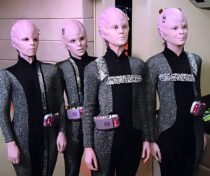
When Star Trek VI: The Undiscovered Country premiered in 1991, it wasn’t just another installment in a long-running franchise—it was a cinematic farewell, a dignified bow for the original Star Trek crew that had been boldly going since 1966. And like all good send-offs, it knew exactly what made the audience care: not just the science fiction, but the human (and alien) drama. Instead of relying on flashy battles or technobabble, Nicholas Meyer, returning to the director’s chair after The Wrath of Khan, delivered a story that was part political thriller, part Cold War allegory, and all heart. It gave these beloved characters a stage worthy of their final curtain call, all while holding a mirror to both history and the franchise itself.

The film opens with a literal bang—Praxis, the Klingon moon, explodes in a mushroom cloud that would make Oppenheimer twitch. It’s the galactic equivalent of Chornobyl, and like that real-world disaster, it forces a political reckoning. Suddenly, the warrior race that has defined itself through strength and opposition is facing ecological collapse. Their empire, like the Soviet Union before it, is crumbling under the weight of unsustainable ambition. And so, the unthinkable happens: the Klingons ask for peace.

What follows is Star Trek at its most Shakespearean—and I don’t just mean that General Chang quotes the Bard like he’s auditioning for a Klingon production of Julius Caesar. The story is soaked in the themes of betrayal, legacy, and the pain of letting go. Captain Kirk, still grieving the death of his son at Klingon hands, is suddenly asked to dine with his enemies. His prejudice is laid bare, and William Shatner—often unfairly dismissed for his acting—gives one of his most restrained, nuanced performances. His disgust is palpable, his conflict genuine. For all of Kirk’s swagger and speeches, he’s still a man shaped by loss. That’s what makes his eventual change of heart so powerful. He’s not just changing policy; he’s evolving as a person.

Then the assassination hits. Chancellor Gorkon, a Gorbachev-like reformer with vision beyond his time, is struck down after a suspicious attack on the Klingon ship. Kirk and McCoy, who genuinely try to save the dying Chancellor in one of DeForest Kelley’s finest scenes, are railroaded into a show trial. The courtroom sequence is a masterclass in tone—equal parts Orwellian nightmare and darkly comic satire of Soviet justice. The fact that Worf’s grandfather is their defense attorney is the kind of world-building wink that makes longtime fans grin.

On Rura Penthe—the alien gulag where hope goes to freeze—we get more than just icy visuals. We see Kirk and Bones at their most desperate, forced to reckon with their mortality in a way that feels earned. And when the Enterprise rescues them, it’s not just a plot beat. It’s a rekindling of faith. Spock’s quiet maneuvering, his trust in his human captain, underscores the heart of Star Trek: that logic and emotion aren’t opposites—they’re partners.

The final act unfolds like a Federation version of The Manchurian Candidate, complete with snipers, conspiracies, and political stakes so high you can feel the tension ripple through the Khitomer conference hall. The reveal of a multi-species conspiracy—Klingons, Starfleet, Romulans—feels like Tinker Tailor Soldier Spy in space. They don’t want peace; they want the war to continue, because peace threatens their power. It’s a sophisticated, adult idea for a franchise born in the optimistic glow of the 1960s.

But the real triumph? It’s in the characters. This crew, these old spacefaring lions, aren’t just relics. They matter. The torch is passed not by death, but by choice. Their final log entry isn’t one of finality, but of transition. And that’s the genius of The Undiscovered Country: it doesn’t just end a chapter. It celebrates what made the story worth telling in the first place.

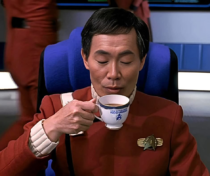
Oh, and yes—David Warner as Gorkon? Inspired casting. Christopher Plummer as Chang? Gloriously over-the-top in the best possible way. And George Takei as Sulu, finally in command of the Excelsior, gets the “hell yes” moment every fan had been waiting for. It’s the kind of thoughtful, literate science fiction that respects its audience—and its legacy.