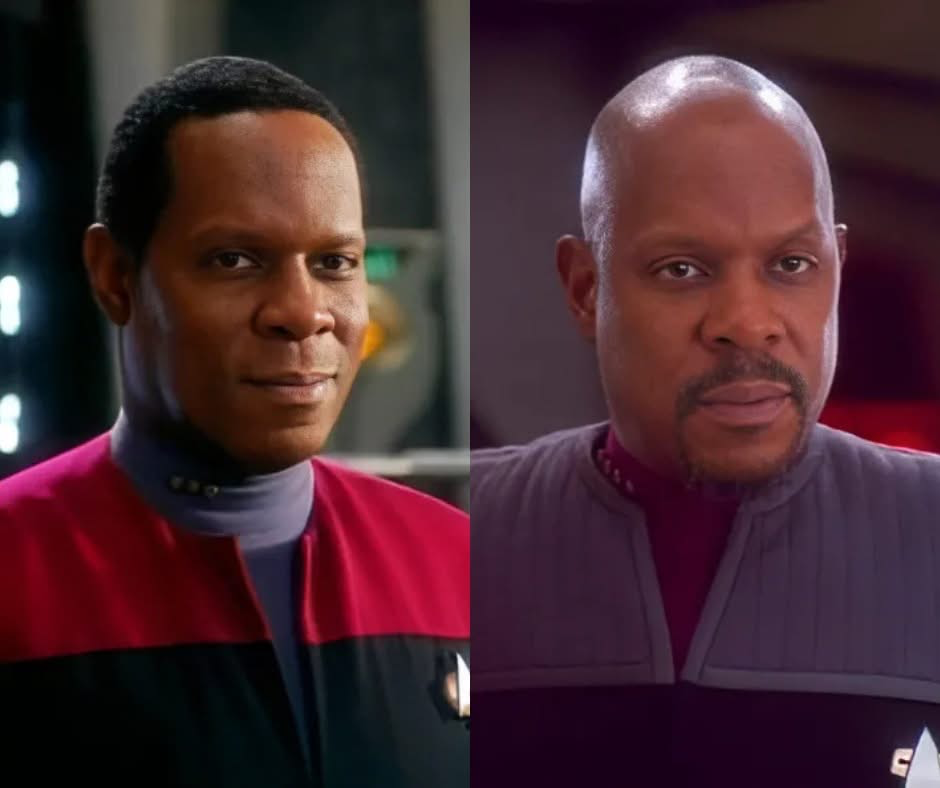
For the first few seasons of Star Trek: Deep Space Nine, Benjamin Sisko wore his hair like a man still tethered to Starfleet convention—a tight, conservative trim, the sort of cut you’d expect on a Federation officer with a desk job and a pension plan. But then, around season four, a shift happened. The man who once looked like he moonlighted as a guidance counselor walked onto the Promenade looking like he could command a fleet and headline a jazz club. The hair was gone. The goatee was in. And with that transformation, Captain Sisko became the emperor of cool in the Star Trek universe.
Let’s not mince words: bald Sisko is definitive Sisko. The look is iconic—majestic even. It brought an intensity to the character that hair simply could not. When Sisko was clean-cut and bare-lipped, he was a competent commander navigating political minefields and Cardassian cold shoulders. But when he embraced the bald dome and that sculpted goatee? He was The Emissary. Not just a Starfleet officer—a mythic figure. You could practically hear the Bajoran Prophets nodding in approval from the Celestial Temple.
Now, for those wondering why Avery Brooks made the change mid-series—it’s actually rooted in the actor’s own identity. Brooks had long preferred the bald-head-and-beard combo. Go back and watch him as Hawk in Spenser: For Hire and its spinoff A Man Called Hawk—he was all bald, all beard, all attitude. That look wasn’t just aesthetic. It was powerful, unapologetic, and deeply tied to his identity as a Black man in Hollywood who wasn’t interested in conforming to safe, sanitized roles. But during the early seasons of DS9, he was required to keep his hair and stay clean-shaven. The studio didn’t want Sisko to look “too intimidating,” a loaded phrase if there ever was one. It’s a quiet testament to the racial politics still simmering under the surface of 1990s television.
By season four, though, that restriction lifted. The writers knew the show was evolving—from a slow-burn political drama to a sprawling war epic with spiritual overtones—and Sisko had to evolve with it. The beard and shaved head weren’t just cosmetic; they mirrored his growing spiritual weight and moral authority. The character was no longer just holding the line at a remote outpost. He was shaping the fate of a quadrant. You don’t go into a war against the Dominion with a baby face and a side part.
Visually, the change was electrifying. Sisko’s new look brought gravity, charisma, and a kind of subdued menace that gave him the presence of a man who could go toe-to-toe with Klingons, changelings, and gods alike. Think about his greatest moments: punching Q, delivering “It’s a fake!” with righteous fury, or making a morally gray bargain with Garak in “In the Pale Moonlight.” All of them came after the transformation. Coincidence? Please.
Sisko’s arc is about transformation—from grieving father to military leader to religious icon. The bald head and beard are part of that metamorphosis. They visually announce that he’s no longer tethered to what Starfleet wants him to be—he’s becoming what the story needs him to be.
So, did Sisko look better with hair or bald? That’s like asking if Gandalf worked better as the Grey or the White. The latter might not have happened without the former, but come on—you know which one you’d follow into battle.