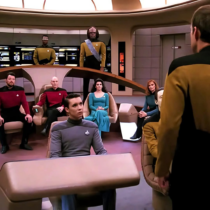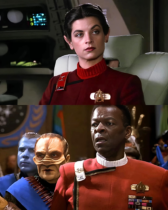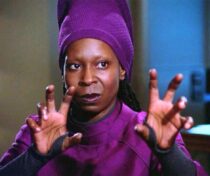
Star Trek VI: The Undiscovered Country

When Star Trek VI: The Undiscovered Country premiered in 1991, it wasn’t just another installment in a long-running franchise—it was a cinematic farewell, a dignified bow for the original Star Trek crew that had been boldly going since 1966. And like all good send-offs, it knew exactly what made the audience care: not just the science fiction, but the human (and alien) drama. Instead of relying on flashy battles or technobabble, Nicholas Meyer, returning to the director’s chair after The Wrath of Khan, delivered a story that was part political thriller, part Cold War allegory, and all heart. It gave these beloved characters a stage worthy of their final curtain call, all while holding a mirror to both history and the franchise itself.

The film opens with a literal bang—Praxis, the Klingon moon, explodes in a mushroom cloud that would make Oppenheimer twitch. It’s the galactic equivalent of Chornobyl, and like that real-world disaster, it forces a political reckoning. Suddenly, the warrior race that has defined itself through strength and opposition is facing ecological collapse. Their empire, like the Soviet Union before it, is crumbling under the weight of unsustainable ambition. And so, the unthinkable happens: the Klingons ask for peace.

What follows is Star Trek at its most Shakespearean—and I don’t just mean that General Chang quotes the Bard like he’s auditioning for a Klingon production of Julius Caesar. The story is soaked in the themes of betrayal, legacy, and the pain of letting go. Captain Kirk, still grieving the death of his son at Klingon hands, is suddenly asked to dine with his enemies. His prejudice is laid bare, and William Shatner—often unfairly dismissed for his acting—gives one of his most restrained, nuanced performances. His disgust is palpable, his conflict genuine. For all of Kirk’s swagger and speeches, he’s still a man shaped by loss. That’s what makes his eventual change of heart so powerful. He’s not just changing policy; he’s evolving as a person.

Then the assassination hits. Chancellor Gorkon, a Gorbachev-like reformer with vision beyond his time, is struck down after a suspicious attack on the Klingon ship. Kirk and McCoy, who genuinely try to save the dying Chancellor in one of DeForest Kelley’s finest scenes, are railroaded into a show trial. The courtroom sequence is a masterclass in tone—equal parts Orwellian nightmare and darkly comic satire of Soviet justice. The fact that Worf’s grandfather is their defense attorney is the kind of world-building wink that makes longtime fans grin.

On Rura Penthe—the alien gulag where hope goes to freeze—we get more than just icy visuals. We see Kirk and Bones at their most desperate, forced to reckon with their mortality in a way that feels earned. And when the Enterprise rescues them, it’s not just a plot beat. It’s a rekindling of faith. Spock’s quiet maneuvering, his trust in his human captain, underscores the heart of Star Trek: that logic and emotion aren’t opposites—they’re partners.

The final act unfolds like a Federation version of The Manchurian Candidate, complete with snipers, conspiracies, and political stakes so high you can feel the tension ripple through the Khitomer conference hall. The reveal of a multi-species conspiracy—Klingons, Starfleet, Romulans—feels like Tinker Tailor Soldier Spy in space. They don’t want peace; they want the war to continue, because peace threatens their power. It’s a sophisticated, adult idea for a franchise born in the optimistic glow of the 1960s.

But the real triumph? It’s in the characters. This crew, these old spacefaring lions, aren’t just relics. They matter. The torch is passed not by death, but by choice. Their final log entry isn’t one of finality, but of transition. And that’s the genius of The Undiscovered Country: it doesn’t just end a chapter. It celebrates what made the story worth telling in the first place.

Oh, and yes—David Warner as Gorkon? Inspired casting. Christopher Plummer as Chang? Gloriously over-the-top in the best possible way. And George Takei as Sulu, finally in command of the Excelsior, gets the “hell yes” moment every fan had been waiting for. It’s the kind of thoughtful, literate science fiction that respects its audience—and its legacy.

Captain Benjamin Sisko

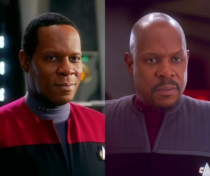
For the first few seasons of Star Trek: Deep Space Nine, Benjamin Sisko wore his hair like a man still tethered to Starfleet convention—a tight, conservative trim, the sort of cut you’d expect on a Federation officer with a desk job and a pension plan. But then, around season four, a shift happened. The man who once looked like he moonlighted as a guidance counselor walked onto the Promenade looking like he could command a fleet and headline a jazz club. The hair was gone. The goatee was in. And with that transformation, Captain Sisko became the emperor of cool in the Star Trek universe.

Let’s not mince words: bald Sisko is definitive Sisko. The look is iconic—majestic even. It brought an intensity to the character that hair simply could not. When Sisko was clean-cut and bare-lipped, he was a competent commander navigating political minefields and Cardassian cold shoulders. But when he embraced the bald dome and that sculpted goatee? He was The Emissary. Not just a Starfleet officer—a mythic figure. You could practically hear the Bajoran Prophets nodding in approval from the Celestial Temple.

Now, for those wondering why Avery Brooks made the change mid-series—it’s actually rooted in the actor’s own identity. Brooks had long preferred the bald-head-and-beard combo. Go back and watch him as Hawk in Spenser: For Hire and its spinoff A Man Called Hawk—he was all bald, all beard, all attitude. That look wasn’t just aesthetic. It was powerful, unapologetic, and deeply tied to his identity as a Black man in Hollywood who wasn’t interested in conforming to safe, sanitized roles. But during the early seasons of DS9, he was required to keep his hair and stay clean-shaven. The studio didn’t want Sisko to look “too intimidating,” a loaded phrase if there ever was one. It’s a quiet testament to the racial politics still simmering under the surface of 1990s television.

By season four, though, that restriction lifted. The writers knew the show was evolving—from a slow-burn political drama to a sprawling war epic with spiritual overtones—and Sisko had to evolve with it. The beard and shaved head weren’t just cosmetic; they mirrored his growing spiritual weight and moral authority. The character was no longer just holding the line at a remote outpost. He was shaping the fate of a quadrant. You don’t go into a war against the Dominion with a baby face and a side part.

Visually, the change was electrifying. Sisko’s new look brought gravity, charisma, and a kind of subdued menace that gave him the presence of a man who could go toe-to-toe with Klingons, changelings, and gods alike. Think about his greatest moments: punching Q, delivering “It’s a fake!” with righteous fury, or making a morally gray bargain with Garak in “In the Pale Moonlight.” All of them came after the transformation. Coincidence? Please.

Sisko’s arc is about transformation—from grieving father to military leader to religious icon. The bald head and beard are part of that metamorphosis. They visually announce that he’s no longer tethered to what Starfleet wants him to be—he’s becoming what the story needs him to be.

So, did Sisko look better with hair or bald? That’s like asking if Gandalf worked better as the Grey or the White. The latter might not have happened without the former, but come on—you know which one you’d follow into battle.

Lt. Reginald (broccoli) Barclay

I’ve been in writers’ rooms where we argued for hours over whether a Klingon would cry. I’ve seen showrunners agonize over whether a malfunctioning holodeck counts as “lazy writing” or a brilliant metaphor. But nothing in those rooms—not a single whiteboard pitch or late-night rewrite—comes close to the real-life stakes of what Reginald Barclay represents in Star Trek: The Next Generation. It’s not just a subplot about holodeck addiction or social anxiety. It’s a Trojan horse of vulnerability, disguised in 24th-century tech and technobabble, sneaking a very real human truth past the phasers and warp drives.

Let’s not kid ourselves: Barclay’s introduction in “Hollow Pursuits” was a gamble. The TNG crew, especially in those early Roddenberry-mandated utopia years, functioned like a team of flawless Olympians in space—morally unassailable, emotionally mature, and dressed like sentient seat cushions. Then here comes this guy: mumbly, anxious, awkward, clearly uncomfortable in his own skin. A character who felt like us, or at least like someone we’ve met in the breakroom or, more uncomfortably, in the mirror. And Dwight Schultz didn’t just play him—he excavated him. You could see the man trying to stitch himself together with every line of dialogue. The performance didn’t scream “Look at me!”—it whispered, “Please don’t.”

For someone like me—a white, cis, straight guy who, statistically speaking, fits neatly into most boardrooms, classrooms, and genre writers’ panels—admitting any kind of mental health issue can feel like violating an invisible contract. The world already cut me a favorable hand; now I want empathy too? It’s the kind of guilt that sits quietly in your chest until someone like Barclay appears on your screen, fumbling through a conversation with Geordi, and you realize: Oh. I’m not the only one who feels like an impostor in their own life.

The cultural stakes get higher when we consider the portrayal of mental illness across the board. Women, BIPOC, LGBTQ+ individuals—those whose identities put them in society’s crosshairs already—are doubly punished when they reveal emotional struggles. The same vulnerability that earns a Barclay a charming redemption arc might mark someone else as “unstable,” “difficult,” or worse. That’s not a storytelling flaw—that’s a systemic one. But stories shape empathy, and if Star Trek has taught us anything, it’s that representation isn’t just about who’s on the bridge—it’s about who gets to be messy on the bridge.

Of course, we also can’t ignore that even fictional disclosure has its costs. Barclay’s addiction to the holodeck isn’t played entirely straight. His fantasy scenarios—Troi feeding him grapes, Picard stammering like a junior ensign—draw laughs before they draw sympathy. And that’s the razor-thin edge the episode walks: inviting us to chuckle at the absurdity while daring us to care about the man underneath. That’s not just clever writing. That’s moral sleight-of-hand. And the truth is, in real life, disclosure often comes with that same paradox. People will nod supportively in public, then quietly reassess your reliability, your “vibe,” your “fit.” The bridge crew might rally behind Barclay, but would Starfleet HQ have promoted him?

But here’s the kicker—and why this still matters, decades later. Barclay isn’t just a character who got better. He’s a character who kept trying. He shows up in later episodes. He joins the Pathfinder Project. He even gets to be the voice of reason in Voyager. In a franchise where so many arcs end with tidy triumphs, Barclay’s journey is refreshingly messy and ongoing. That’s a gift to every viewer whose life doesn’t resolve by the end credits.

So yeah, I get the hesitation in writing this. I get the fear of being perceived as too much, or not enough, or just different in a way that makes people uncomfortable. But when you step back and look at it closely, hiding that discomfort only strengthens the stigma. Speaking it aloud? That’s not self-pity. That’s solidarity. That’s showing up, the way Barclay kept showing up, even when his palms were sweaty and his holodeck history was deeply weird.

And if you ever meet someone like him in your own life—whether they’re stammering in a staff meeting or dodging eye contact at a party—remember that it takes real courage just to be in the room. Offer them a seat at the table. Let them talk, or not. Be Geordi, not Riker. Be Troi, not the guy laughing at grape-eating fantasies. The universe may be vast and strange, but kindness? That’s the real final frontier.

MentalHealthInMedia #StarTrekTNG #ReginaldBarclay #HollowPursuits #OCDawareness #SciFiWithSoul #RepresentationMatters

Savvik and Admiral Cartwright

When Kirstie Alley turned down the chance to reprise her role as Lieutenant Saavik in Star Trek VI: The Undiscovered Country, it didn’t just affect casting—it altered the trajectory of the entire film’s plot 🖖✨. The domino effect of her absence led to one of the franchise’s most surprising twists: the betrayal of Admiral Cartwright.

Director Nicholas Meyer, in his autobiography The View From The Bridge: Memories of Star Trek and a Life in Hollywood, spilled the behind-the-scenes truth. He had originally envisioned a trusted and familiar face from previous Star Trek adventures being revealed as a conspirator—someone whose fall from grace would hit hard. Saavik was the natural choice, having appeared in two prior films, but without Alley, that plan crumbled.

Rather than recast Saavik again or dull the emotional impact with a lesser-known character, Meyer made a bold decision: he elevated Admiral Cartwright, played by the deeply charismatic Brock Peters, to traitorous status. Cartwright had shown up in Star Trek IV: The Voyage Home, cautioning Kirk about returning to Earth during the Whale Probe crisis. His role may have been brief, but Peters’ commanding presence left a mark on fans. Choosing him as the turncoat injected a visceral shock into the narrative. After all, Peters’ portrayal exuded Federation loyalty—making his betrayal feel like a gut punch across the galaxy 🚀💥.

Meyer explained his thinking: he wanted the audience to feel blindsided, to realize that even the seemingly noble could harbor darkness. Peters had a history of playing nuanced villains, but to Trek fans, he was solid Starfleet gold. That contrast was what Meyer hung the emotional tension of the film on.

But the casting changes didn’t end there. With Saavik off the table, a new Vulcan needed to step in. Enter Lieutenant Valeris, portrayed by Kim Cattrall 🖖🕶️. She wasn’t just a random replacement—Valeris became Spock’s newest protégé, a role meant to echo Saavik’s relationship with him. Valeris, working in concert with Cartwright, allowed for betrayal both intimately aboard the USS Enterprise and institutionally at the highest levels of Starfleet.

And just to twist the knife even further, a third conspirator was introduced: Colonel West, played by Rene Auberjonois (who would later become fan-favorite Odo in Deep Space Nine). This web of betrayal, originally spun around a returning Saavik, transformed into a broader, more layered conspiracy that enriched the film’s narrative stakes.

So in a galaxy where a single casting decision can ripple across star systems, Kirstie Alley’s absence didn’t just change a role—it reshaped Star Trek history. 🌌🎬

An unapologetic love letter to Star Trek

If you’d told me twenty years ago that Family Guy’s Peter Griffin would grow up to command one of the most emotionally resonant, culturally curious starships on television, I would’ve laughed you out of Ten Forward. But here we are. And Jonathan Frakes—Commander Riker himself—sees what many genre aficionados have been shouting from their plasma-lit rooftops for years: The Orville isn’t just a sci-fi comedy with a Seth MacFarlane stamp. It’s a full-throated, warp-drive-powered love letter to Star Trek in its purest, Roddenberry-est form.

Frakes, who’s directed episodes across the Trek multiverse—from TNG and DS9 to Picard—knows a thing or two about what makes this kind of storytelling hum. So when he calls The Orville “very much Roddenberry,” that’s not a casual pat on the back—it’s a nod of deep professional respect. In an era where science fiction often leans into spectacle over substance, MacFarlane zagged, crafting a show that isn’t afraid to press pause on space battles to dissect cultural dilemmas, ethical paradoxes, and good old-fashioned human frailty. Sound familiar?

Of course it does. That was Star Trek’s real prime directive: use the stars as a mirror, not a map. From TOS episodes like “Let That Be Your Last Battlefield” to TNG’s “The Measure of a Man,” Trek has always been less about photon torpedoes and more about moral torpedoes—quietly launching ideas into the social bloodstream under the radar of network suits. The Orville picks up that baton and runs—not with the self-seriousness of later Trek installments, but with a wink and a heart.

Frakes admitted he expected The Orville to be goofier, and who could blame him? This was the guy who built an empire out of fart jokes and anthropomorphic baby rants. But MacFarlane, a lifelong Next Gen fan who allegedly knew the Enterprise-D’s layout better than most of its actors, took his shot at the captain’s chair seriously. He staffed his ship with characters who felt lived-in: Ed Mercer is as much Picard as he is Kirk via a Harvard Lampoon sketch. Kelly Grayson, Claire Finn, Bortus—each member of the crew has that sweet spot between archetype and authenticity that classic Trek did best. And when it works, it works. “About a Girl”? That’s not just a bottle episode; it’s a bottle rocket aimed at the heart of the culture wars.

And let’s not forget: Frakes directed two episodes of The Orville. You can feel his touch in the pacing, in the way scenes breathe and arguments play out with sincerity rather than snark. He’s not alone either. Trek veterans like Robert Duncan McNeill and Brannon Braga (who co-created The Orville) helped MacFarlane make the transition from parody to paragon.

Look, The Orville isn’t perfect. The humor doesn’t always land. The uniforms look like a cross between paramedic scrubs and a soda company’s brand guide. But what it gets right—its emotional intelligence, its willingness to wrestle with complicated issues like identity, parenthood, diplomacy, and forgiveness—that’s where it transcends pastiche and becomes genuine homage.

Meanwhile, the Star Wars vs. Star Trek debate still rages in geek circles, but let’s be honest: Star Wars was always more myth than method. Trek, especially under Roddenberry, asked us to believe that humanity could evolve—not into Jedi, but into better versions of ourselves. MacFarlane tapped into that idea not with nostalgia, but with earnest storytelling and sly subversion. And Frakes, who’s been part of the Federation fabric since the 1980s, saw through the jokes to the substance underneath.

So yes, Jonathan Frakes is right. The Orville is one of the most slept-on shows in MacFarlane’s galaxy-spanning career. It’s also one of the most quietly courageous things to come out of modern genre TV—a reminder that science fiction, at its best, doesn’t just imagine new worlds. It dares to challenge our own.

Inconceivable! An unlikely Vizzini

Wallace Shawn’s hands would often tremble as he walked onto the set of “The Princess Bride” (1987). It wasn’t the challenge of delivering Vizzini’s complex, fast-paced lines that unsettled him; it was the paralyzing fear that, at any moment, director Rob Reiner would decide he was the wrong choice for the role. This fear wasn’t abstract. Shawn knew he hadn’t been the first choice for the character of the self-proclaimed genius Vizzini. Danny DeVito, a towering name in comedy at the time, had been Reiner’s original pick. While scheduling conflicts had taken DeVito out of the running, Shawn felt like an impostor who had lucked into a role meant for someone else.

Shawn’s anxiety wasn’t baseless in his mind. He viewed DeVito as a giant of comedic timing and larger-than-life energy, someone whose every movement commanded attention. Shawn, by contrast, had built his career on intellectual, understated humor in films like “My Dinner with Andre” (1981). He was intensely self-critical, believing his quieter, more cerebral style was entirely unsuited to Vizzini’s flamboyant, arrogant nature. That fear, that anxiety sat front frow in Wallace’s mind, with every take on set being overshadowed by that nagging thought that his performance lacked the bold confidence the character demanded.

Shawn’s insecurities peaked when filming the now-legendary “Battle of Wits” scene. In this pivotal moment, Vizzini engages Westley (played by Cary Elwes) in a duel of logic over poisoned goblets. The scene, layered with rapid dialogue and comedic absurdity, required Shawn to deliver a near-operatic performance, alternating between smug superiority and flustered frustration. While the crew laughed at his pitch-perfect delivery of “Inconceivable!” and his frantic attempts to outsmart Westley, Shawn remained convinced he wasn’t funny enough. He later revealed that he spent much of the scene preoccupied with thoughts of DeVito in his place, imagining the crowd laughing harder and the scene landing better.

Shawn didn’t realize how his fear shaped his performance in extraordinary ways. Vizzini, after all, is a character who masks deep insecurity with bluster and bravado. Shawn’s real-life unease brought an authenticity to the role that even Reiner hadn’t expected. With its distinct nasal quality, his voice became an instrument of comedic precision, capturing Vizzini’s arrogance and fragility in equal measure. Every exaggerated hand gesture, every strained attempt at sounding confident, carried a subtle vulnerability that elevated the character beyond mere parody.

Co-stars like Cary Elwes and Mandy Patinkin observed Shawn’s anxiety on set but admired his commitment. Elwes later described how Shawn’s internal struggle mirrored the story’s intensity, making his scenes electric. Reiner, meanwhile, never once doubted his casting decision. He saw in Shawn a unique energy that no other actor could replicate. DeVito may have brought a louder, more physical comedy to the role, but Shawn’s version of Vizzini became more layered, a study in the comedy of overcompensation.

Years later, Shawn admitted that his fear of being replaced never left him during filming. But this fear transformed Vizzini into one of the most iconic characters in “The Princess Bride.” The tension between arrogance and self-doubt became the heart of the performance, making Vizzini not just a comedic foil but an unforgettable part of cinematic history.

USS Voyager

The USS Voyager’s mission to the Delta Quadrant was meant to be routine, a mission that would stretch the limits of space exploration and introduce the crew to the mysteries of this new region of space. The starship, an Intrepid-class vessel designed for scientific research, was launched in 2371 with high hopes. Its mission: to boldly go where no Federation ship had gone before, seeking knowledge, peace, and new frontiers. But fate, as it often does, had a different plan.

Barely on its maiden voyage from Deep Space Nine, Voyager, and its crew had no idea they were about to be thrust into a situation none of them could have prepared for. Voyager had no idea they were about to be caught in the grip of a mysterious and powerful force – an energy entity known only as the Caretaker. This incorporeal being, whose intentions were as enigmatic as its form, had a singular goal: to protect the Ocampa, a peaceful race whose survival was in jeopardy. In its attempt to safeguard them, the Caretaker had inadvertently endangered the entire galaxy, tearing a rift in space-time that pulled the Voyager and its crew 70,000 light-years away from home into the unknown expanse of the Delta Quadrant.

The Caretaker, despite its immense power, was dying. It could no longer sustain the Ocampa people on their arid world. The fate of the Caretaker and the Ocampa people had already been sealed, and pulling Voyager across the universe was a last-ditch effort of the Caretaker to ensure the Ocampa survived. The Caretaker gave no care or forethought to the fact that the crew of Voyager had no idea how to survive in this region of space. They were essentially left adrift, badly damaged, and had zero information about their location, the political environment (if any), or why they were there. And worst of all, the crew was utterly cut off from home and could not communicate with The Federation. Any hail would take seventy thousand years to be received. By then, Voyager would not be in the same place, so communication became impossible based on their current technology.

The Federation was now a distant dream, and the safety of the Alpha Quadrant seemed as unreachable as the farthest star. The crew, led by newly promoted Captain Kathryn Janeway in her first command, faced an unimaginable challenge: to survive in a hostile and unknown part of the galaxy and find their way home while continuing their exploration mission. The crew, resilient and determined, had to come to terms quickly that they would never see home in their lifetimes.

However, the vastness of space and the challenges of the Delta Quadrant were not the only obstacles they faced. Along the way, Janeway and her hodgepodge crew encountered a series of threats more dangerous than they could have ever anticipated. Among these was the Borg, the relentless, cybernetic collective whose very presence struck fear into the hearts of every Federation officer. As if stranded in a region of space where the Borg were a constant menace wasn’t enough, Voyager found itself not only in their path but also profoundly entangled with them. The Borg’s terrifying ability to assimilate entire civilizations was a looming danger, but ironically, their technology – a transwarp hub – ultimately provided the key to Voyager’s salvation.

In a twist of fate, the very enemy that posed such a threat to the Voyager’s mission became the instrument of its survival. By seizing control of one of the Borg’s transwarp hubs, Voyager could close the unimaginable distance between the Delta Quadrant and Earth in a single, staggering instant. A journey that should have taken decades was reduced to mere moments, a victory born not out of triumph over the Borg but through their own technology.

Captain Janeway, forever shaped by the harsh lessons of this extended journey, and her crew, who had been tested beyond measure, returned home – not as they had set out, with optimism and certainty, but with a deep understanding of the fragility of life in the universe and the complexity of fate. What started as an accidental detour in space had turned into a profound journey of self-discovery, resilience, and the unshakable belief that, no matter how lost one may seem, the road home might be closer than one thinks.

Captain Montgomery “Scotty” Scott

When you think of Star Trek’s legendary engineer, Montgomery “Scotty” Scott, you might picture him working furiously at a control panel, his face bathed in the dim red glow of the engineering bay, the ship’s fate hanging in the balance. But perhaps one of his most audacious, not to mention creative, acts of repair wasn’t something you’d find in a routine repair log. It was a gamble with time, a wager against fate itself. And it wasn’t in a clean, high-tech starbase; it was in a shuttlecraft, deep in the heart of space, on the verge of a century-long wait.

The year was 2267, and a life-or-death situation aboard the Federation starship Enterprise seized Scotty. During a routine mission, the Enterprise was thrust into an unexpected encounter with the Romulans, causing severe damage to the ship and the crew. The Jenolan, an old Federation starship, was in peril, and its crew was in jeopardy. Scotty knew the ship’s engines could barely hold together, and the distress signal was a faint echo lost among the stars. The crew had to escape.

In a desperate, seemingly impossible attempt to save the ship, Scotty devised a brilliant and ultimately risky solution: he decided to “suspend” himself. Rather than waiting for help the traditional way, with scanners, engines, and predictable systems, Scotty did something few engineers would even dare consider: He stepped into the Jenolan transporter.

But this wasn’t your ordinary matter-energy transport. No, Scotty’s idea was far more unorthodox. Rather than simply transporting himself to safety, he locked his pattern in the transporter’s buffer, not for minutes or hours, but for decades—75 years to be exact. He would exist in a time loop, his pattern cycling endlessly within the machine’s systems. His body would not age, not deteriorate, not experience the ravages of time, yet he would remain conscious, waiting for a rescue that might never come. In essence, Scotty was betting against time itself.

The machines of the 23rd and 24th centuries were as ingenious as they were dangerous. Transporters, designed to be a bridge between places and people, were never meant for such prolonged use. While intended for short-term storage of patterns, transporter systems weren’t designed to hold the consciousness of a living person for nearly a century of continuous use. But Scotty, the brilliant, somewhat eccentric engineer, knew the system well enough to tweak it beyond recognition. He managed to keep his pattern in a state of stasis, existing in the transporter buffer with enough stability to maintain his consciousness without experiencing the slow decay of time. While trapped in the system, his mind was active, thoughts intact, though he was effectively trapped in a time loop, waiting and hoping for rescue.

And that rescue finally came. It took the Enterprise nearly a century to stumble upon the Jenolan, or rather, it took Cmdr La Forge a short time to discover that the transporter systems on the Jenolan still had power. When the Enterprise crew found his presence in the transporter buffer, Scotty had been cycling through the pattern for 75 years. And yet, in that time, he hadn’t lost his sense of self nor his ingenuity. Scotty’s mind had remained sharp despite being physically absent for seven-and-a-half decades. His most incredible creation wasn’t a warp drive or a dilithium coil; it was a time-defying solution, a testament to his remarkable understanding of both the limits and possibilities of technology.

This moment is one of Scotty’s most inventive and daring emergency repairs. It wasn’t just about fixing a broken ship; it was about manipulating time itself, becoming a living testament to what one engineer could do when faced with the ultimate test of survival. The idea of locking oneself in a transporter buffer, knowing that the only way out was a rescue almost a century in the future, is not only brilliant—it’s pure Scotty: resourceful, audacious, and ultimately triumphant in the face of impossible odds.

The story of Miles O’Brien

The story of Miles O’Brien in Star Trek is one of quiet perseverance and understated brilliance. When O’Brian first appears on screen, standing at the transporter console aboard the USS Enterprise-D, he appears to be seen in a role that seems, at first glance, to understate his technical prowess. Many wonder why someone of his skill wasn’t stationed in Main Engineering, working alongside Geordi La Forge. But O’Brien’s journey is a testament to how a career in Starfleet—or any career, for that matter—rarely begins at the top and how unassuming roles can hide profound importance.

Transporter chief isn’t just about “beaming people up.” The position comes with immense responsibility. O’Brien wasn’t merely pressing buttons; he was managing the delicate dance of quantum mechanics that kept crew members alive during transport. A miscalculation could result in tragedy—a fate Star Trek fans know well from transporter mishaps. On the flagship of the Federation, where every officer is expected to excel, being in charge of transporter operations meant ensuring absolute precision. O’Brien’s work had to be flawless, and it often was. Behind the console, he was quietly mastering his craft.

But transporter operations weren’t O’Brien’s only contribution aboard the Enterprise-D. Throughout his time on the ship, he proved repeatedly that his engineering expertise extended far beyond his station. O’Brien’s quick thinking and practical problem-solving approach allows him to play a critical role in saving the day. In critical episodes, such as when the ship faced technical crises, O’Brien’s quick thinking and deep knowledge of starship systems saved lives. Though his title was “transporter chief,” he was more than that. This duality of roles—official and de facto—laid the groundwork for his career’s defining characteristics: adaptability and quiet competence. But there are also other moments where you learn that Chief O’Brien is also a deeply flawed man who struggles with honor and duty, as well as a deep-seated hatred that borders on outright racism for Cardassians.

Once Chief O’Brien transferred to Deep Space Nine and assumed the role of Chief of Operations, his skills as an engineer were finally given the space to shine, and he received the spotlight on his unique problem-solving skills, which he deserved. The station was a hodgepodge of Cardassian and Federation technology, with systems as temperamental as they were essential. It was a chaotic, challenging environment that required someone who could think on their feet and make the impossible happen daily. O’Brien thrived. His ability to bridge his engineering acumen with practical problem-solving made him indispensable to the station’s operations and crew.

Why wasn’t O’Brien in Main Engineering aboard the Enterprise-D? The answer lies in how Starfleet operates. The flagship attracted the best and brightest, but every position, from the bridge to the transporter room, was critical. O’Brien’s skills made him a natural fit to ensure the transporter systems functioned flawlessly, a task no less important than maintaining the warp core. His time at the console also allowed him to build a reputation as a reliable, unflappable engineer—qualities that eventually earned him his promotion to chief of operations on Deep Space Nine.

Or did it? Rumor has it that the Chief was so skilled at using the transporter that he could beam two of Commander Riker’s pips off his collar and onto his own, thus reducing Riker’s rank to Ensign and promoting O’Brian’s from Chief to a full Lieutenant. The Chief kept a collection of pips in one of Keiko’s jewelry boxes on a nightstand by their bed. This shenanigan caused him to be punished and exiled to Deep Space Nine. A punishment that Keiko resented more than Miles. However, it was a punishment Miles wore as a badge of honor, as he could turn this into the shining beacon of his success in his career. As we can see throughout the show, despite Miles’ quiet displeasure with his punishment, he is a Starfleet Officer through and through and a consummate soldier who will do as he ordered despite his feelings on the subject.

O’Brien’s story reminds us that career paths aren’t always linear. Starting in a less glamorous position doesn’t diminish one’s abilities or potential. Instead, it often serves as the foundation for future growth. For O’Brien, the transporter console wasn’t a limitation but a launchpad. His journey from transporter chief to the heart and soul of Deep Space Nine is an inspiring narrative about quiet excellence, hard work, and the importance of being ready when opportunity comes knocking.

Ren – Money Game (Parts 1, 2, and 3)

Ren Gill Photo by Samuel Perry Falvey

Money Game (Part 1)

Strange times we’re living in
World can put fear in ya
Hierarchy parties, they make us feel inferior
Greed runs through the parliament interior
Devils walk among us, they fit the criteria

Eerie theories strike fear in weary minded men
When we’re clearly living in dictatorships
Nearly blinded by illusions to choose
But who’s fooling who?
A ball chained to your shoes

I’m pained, it’s a crying shame
The pursuit of our own wealth lights a flame
That makes greed a game that lets the whole world burn
As the world turns, the whole world burns

Money was invented for trade
But now those bits of paper twist hearts, make slaves
Turns a saint into a sinner, a child into a killer
His finger on the trigger of a money game

Oh, rain, rain, rain, rain
A storm, it comes our way
And those who rise through distorted lies
Poison in the veins
But we like to point the blame, blame, blame, blame
It’s easier to blame
But point the mirror at ourselves
We’re all part of this old money game

This old money game

This old

Dear Mr. President, it’s evident that everyone’s a resident
Of fear when they support the ideas that keep us separate
When they make us believe that everybody
Is coming to terrorise you in the streets
They say proudly through gritted teeth
“It’s my right to hate, that’s freedom of speech!”

When did freedom become a reason to hate?
A way to justify a racial slur or insult we make
There’s an irony in freedom, because us in the west
We have pillaged and plundered and murdered like savages
Colonised all of the rest, that’s called hypocrisy
Preach a certain value that you’d never keep yourselves
If your country was in flames, you’d emigrate yourselves in a second

Still, you spit your venom, demonising immigrants
When really, you’re an immigrant
‘Cause all of us are immigrants
Or descended from immigrants
The irony is imminent, I’ll shed the light on immigrants

America was colonised by Britain
Britain, it was colonised by Rome
Also, colonised by the Saxons
They were German, by the way
You know how people throw shade upon the Germans
‘Cause of history’s pain

And yet we make the same mistakes all again
Demonise a whole people, Jewish or Muslim the same and the same
Old situations play on repeat
The same old TV shows repeat
Yeah, we worship the bleak
Our opinions aren’t our own and we follow like sheep
There’s no left, there’s no right
In the middle we sleep

Rain, rain, rain, rain
A storm, it comes our way
And those who rise through distorted lies
Poison in the veins
But we like to point the blame, blame, blame, blame
It’s easier to blame
But point the mirror at ourselves
We’re all part of this old money game

This old money game

This old money game

Money Game (Part 2)

Strange times we’re living in, panic and hysteria
Poor man learn the rich man don’t care for ya
Narcissist mindsets spread like malaria
Sit back and watch the show, America!
Britain split through fickle shit
A government of hypocrites
These counterfeit politicians sit
In parliament, not adequate
Needlessly bleeding resources all dry
Turn a blind eye if it means a pay rise
“Oh what a shame it would be I would die”
If Number 10 Downing Street burned in a fire
Only joking, only messing, don’t be stressing
I’m a peaceful adolescent, there’s no need to be unpleasant Write my thesis in a rhyme scheme
To analyze the brain
While my fingers on the trigger of a money game

Oh Ren, Ren, Ren, Ren
A storm, it comes our way
And those who rise through distorted lies
Poisoning the veins
But we like to point the blame, blame, blame, blame
It’s easier to blame
But point the mirror at ourselves
We’re all part of this old money game
(This old money game)
(This old)

Money is a game and the ladder we climb
Turns a saint into a sinner with his finger in crime
I’ll break it down for you motherfuckers line by line
This is business economics in a nursery rhyme

She sells seashells on a seashore
But the value of these shells will fall
Due to the laws of supply and demand
No one wants to buy shells ’cause there’s loads on the sand

Step 1, you must create a sense of scarcity
Shells will sell much better if the people think they’re rare, you see
Bare with me, take as many shells as you can find and hide ’em on an island stockpile ’em high
until they’re rarer than a diamond

Step 2, you gotta make the people think that they want ’em
Really want ’em, really fuckin want ’em
Hit ’em like Bronson
Influencers, product placement, featured prime time entertainment
If you haven’t got a shell then you’re just a fucking waste man

Three, it’s monopoly, invest inside some property, start a corporation, make a logo, do it properly
“Shells must sell”, that will be your new philosophy
Swallow all your morals they’re a poor man’s quality

Four, expand, expand, expand, clear forest, make land, fresh blood on hand
Five, why just shells? Why limit yourself? She sells seashells, sell oil as well!

Six, guns, sell stocks, sell diamonds, sell rocks, sell water to a fish, sell the time to a clock
Seven, press on the gas, take your foot off the brakes, Run to be the president of the United States

Eight, big smile mate, big wave that’s great Now the truth is overrated, tell lies out the gate

Nine, Polarize the people, controversy is the game
It don’t matter if they hate you if they all say your name

Ten, the world is yours, step out on a stage to a round of applause
You’re a liar, a cheat, a devil, a whore
And you sell seashells on the seashore

Ren, Ren, Ren, Ren
A storm, it comes our way
And those who rise through distorted lies
Poisoning the veins
But we like to point the blame, blame, blame, blame It’s easier to blame
But point the mirror at ourselves
We’re all part of this old money game
(This old money game)
(This old)

Money Game (Part 3)

Let me tell you a story about a boy named Jimmy
One years old and his first words were mine, mine gimme
Two years old, he was walking, three years old, walking quickly
Four years old, he was running around the pavements of his city
Five years old, and his daddy told him, listen here son, you’ve got to learn to be a man
A man he works for what he wants
Six years old, and he’s reading, writing, top of the bunch
And when he’s seven, his progression made him student number one
Eight years old and he’s praised for unusual grades
Nine, his parents pay for private school to nurture the flame
10, 11, 12, 13, he ascends and ascends, his daddy tells him, son, money is the means to all ends
14 solving complex mathematic equations, at 15, IQ 150, still elevating
16 he develops complex software code that detects weaknesses in cyber security protocol

17, and he sells his vision, keeping the share, not yet an adult
But he’s practically a millionaire
18, and his daddy tells him now you’re a man the world don’t give a damn about you
So take all that you can
19, he turns a profit, stocks and shares, invest in product
20, double down deposits 21, his income rockets
22, he learns that truth is just an obstacle to wealth
If you manipulate the data, then the lie will sell itself
23, a life of luxury Crystal and cocaine
24, he makes the Forbes list, they’re applauding his name
25, and his daddy told him, listen here, son, while you’re sitting in the palace
That don’t mean that you won
26, his business shifts, he switches business to arms
He’s 27, dealing nuclear shells in Iran
28, inside the Senate, money bought him a seat
He’s 29, role of counsel in the president suite
And now he’s 30, his daddy says, you’re losing the race
You’re just a servant to the king, not even in second place
31, a big maneuver for his daddy’s approval
Moving imports over borders from the exports out of Cuba
32, moving grams, growing kilo to tons
He’s 33, filling warehouses with powder and guns
34, turf war with nobody to stop it, blind eye from the Po po inside of his pocket

35, he gets a call, I’m sorry, son, but it’s your father, had a heart attack
I’m sorry, he’s gone, 36, getting pissed off abusing this product
37, eyes glazed, disposition demonic
38, with a prostitute, a moment of passion
Heating up the silver spoon and then chasing the dragon
39, getting reckless and hungry for power
Daddy’s words still driving him to kill him and devour
He makes a move against the cartel, but the strategy’s flawed
They retaliate and leave him in the hospital ward
A bullet buried in his vertebra, and one in his leg
The doctor sighs and says, I don’t think you’ll be walking again, fuck

Let me tell you a story about a boy named Jimmy
He was 40 and he cursed the words mine, mine gimme
41, he wasn’t walking, 42, not walking quickly, 43
Never running round the pavements of his city
44 inside a palace with a mountain of gold
But those riches turn to rubble when perspective evolves
Weighing heavy on his conscience is the value of gold, Lamborghini for a life
Trading money for souls, Jimmy followed the code inside the land of the free
Put your hand inside the cookie jar, take more than you need
And his example is exaggerated versions of me, and it’s a version of him
And it’s a version of she, and it’s a version of you
There’s no escaping the blame, the way we live, it’s parasitic
Fuck the money and fame, cut the music

This isn’t entertainment, this is real life, the way we live is lunacy, community it declines
We’re hyperpolarized, we’re always fighting and we divide
Truth is less important than the money that we designed?
Money’s an invention, politics from our invention, they all come from people’s ideas
Did I mention, border’s an invention
Law and order fuels the tension that leads to people killing each other
My solution? Everything is subject to change
We could build utopias if individuals were taught to use their brains
But if we teach kids in schools to always be sheep and put themselves before the herd
If there’s more money for meat
Then there’s no future I see where the humans survive
We’re parasites inside the Petri dish, with cannibal mines
Mold will grow upon the surface, then consumes ’til it dies
And our fate could be the same without this story to the wise
45, Jimmy comes home out of the rain, soaking wet upon a wheelchair
Drinking again, he has everything he wants, he has fortune and fame
Such a fortunate fool with an unfortunate fate with a 45 caliber aimed at his brain
45, a fitting number because his age is the same
Here’s the words of his father, it’s such a damn shame
Then he presses on the trigger of a money game