Recently, mediocre singer (but excellent future infomercial host) Michael Buble got in hot water for posting a pic he snagged of a woman in shorty shorts. And some were offended when Neil Patrick Harris took a break from being a horrible Oscars host to expose the unusual behavior of this New York City subway rider:
For some, this issue is very simple: It’s wrong to take pictures of people without their permission. I’ll admit that stance is clear and straightforward, but I also don’t find it compelling. No one disputes that drilling a hole in a dressing room wall to snap pics is wrong. Everyone agrees using a telephoto lens to take shower pics of your neighbor can’t be defended.
But when you’re out in the world, can you really expect that no one will take your picture? You’re putting yourself out in public. If people don’t need permission to look at you, what is the ethical reason they’d need permission to save one millisecond of that glance? What changes the ethical question of holding an image in your memory versus holding it in your phone? I think if we answer that question honestly, it’s the things that might be done with the photo and not merely that someone memorialized a millisecond of your appearance or behavior that you were already showing the world.
The only time it’s wrong to photograph someone in public is minors, that’s considered child exploitation. Otherwise you are free to photograph anyone you like, ala People of Walmart. It’s legal (in the United States at least).
WHY DOES THIS HAVE TO BE IN FARENHEIT????FUCK YOUR FARENHEITS I NEED TO KNOW THIS AND NOW I HAVE TO GOOGLE IT!!!!!!USA CAN YOU GUYS PLEASE START USING THE METRIC SYSTEM?? SO SICK OF THIS GODDAM
This is an important one (oh, and I got your Celsius /right here/. Come and get it.
On
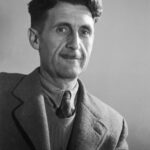
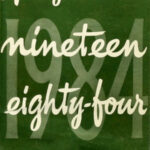
this day in 1949, the famous novel Nineteen Eight-Four by English writer George Orwell was published. Born Eric Arthur Blair, he penned his first
poem when he was four years old, and had his first poem published in a
newspaper at age eleven. Blair studied at the prestigious Eton school,
and went on to work for the imperial police in Burma. After he returned
to England, he adopted the pseudonym George Orwell and published his
first book – Down and Out in Paris and London – in
1933. Even in his early works Orwell demonstrated a keen interest in
political issues, and offered a sharp critique of the British class
system and colonialism. In 1936 he joined the international brigades
fighting in the Spanish Civil War on the side of the Republicans,
against the fascist Francisco Franco. He was injured in the fighting in
Spain, and his health didn’t improve when he returned to England, where
he was diagnosed with tuberculosis. He continued to write, and worked
for the BBC as a propagandist during the Second
World War, before resigning in 1943. It was after he left the BBC that
Orwell wrote his two most famous works – Animal Farm (1945), and Nineteen Eighty-Four (1949).
The latter is a dystopian novel, set only
thirty-five years after it was written, that envisioned a world
characterised by excessive government control and curtailment of civil
liberties. This novel, which followed protagonist Winston Smith, introduced several phrases into the lexicon that
are still used today, including ‘Big Brother’, ‘doublethink’, ‘Room
101’, and ‘thought-police’. Orwell achieved great success with these two
works, but sadly lost his ongoing struggle with tuberculosis in 1950.
“He who controls the past controls the future. He who controls the present controls the past.”
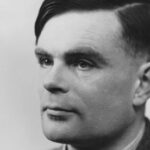
On this day in 1954, the British mathematician and scientist
Alan Turing died. Turing is considered the father of computer science
and artificial intelligence with his invention of the ‘Turing machine’ – a precursor to the modern computer. He was also a crucial part of
England’s code breaking team at Bletchley Park during World War Two, developing ways to
interpret German messages from the Enigma machine. The work of Turing and his fellow code breakers was a great boost to the Allied war effort, supposedly shortening the war by as many as two to four years. However, in 1952 he was
arrested for homosexuality – which was still illegal in Britain –
and accepted chemical castration rather than prison. Turing suffered
side effects from the treatment and two years later died from cyanide
poisoning, supposedly from an apple found by his bed. Whilst some claim
it was accidental, an inquest determined Turing had committed suicide
due to the persecution he suffered. In 2009, following a popular online
petition, Prime Minister Gordon Brown issued a posthumous apology to
Alan Turing.
“We’re sorry, you deserved so much better” – Gordon Brown, 2009