Captain Benjamin Sisko

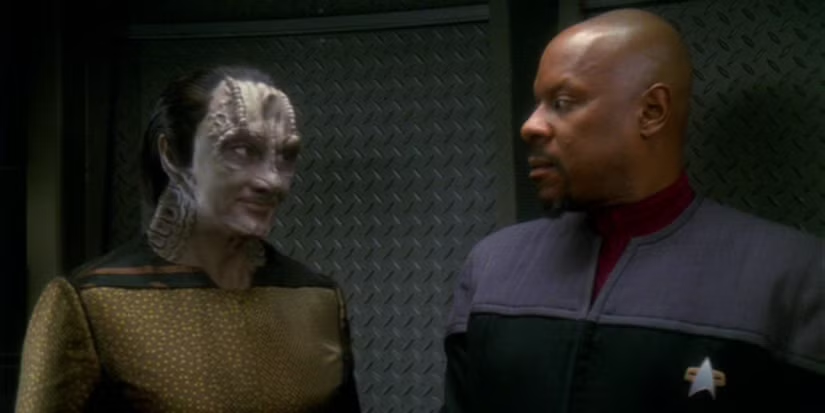
Absolutely. Benjamin Sisko’s actions in Star Trek: Deep Space Nine align strikingly well with the political realism espoused by Machiavelli’s The Prince. He is not merely a Starfleet officer who follows protocol but a leader who understands the weight of responsibility, the murkiness of moral decisions, and the necessity of pragmatic—even ruthless—choices to achieve a greater good. Sisko embodies the qualities of a leader Machiavelli would respect: calculating, adaptable, and willing to prioritize outcomes over ideals when circumstances demand it.

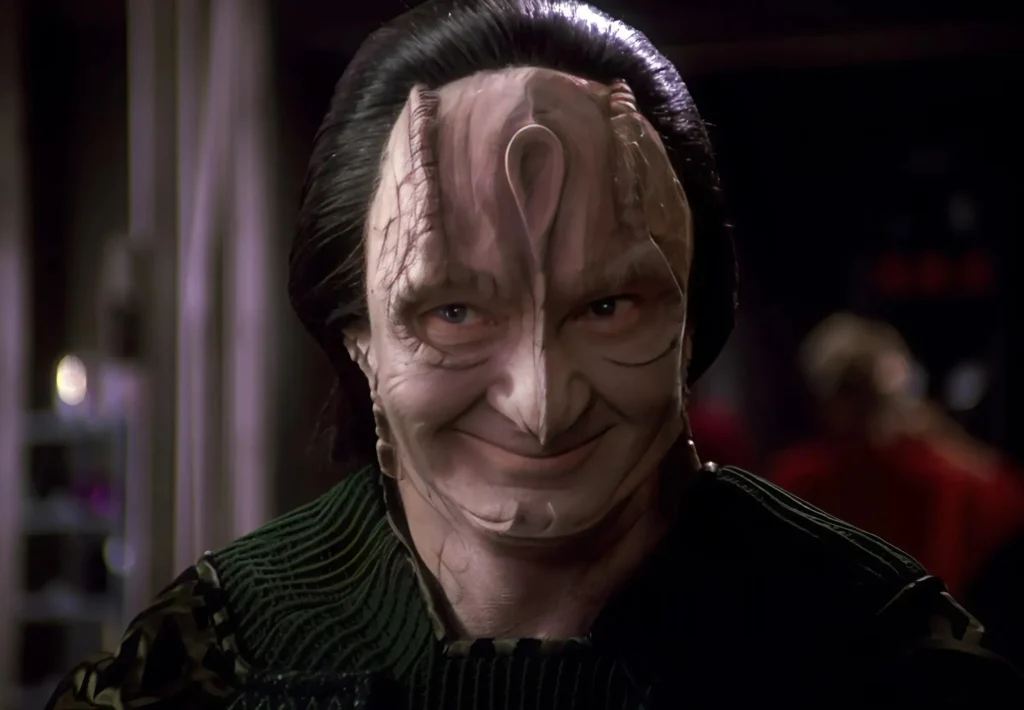
Consider the infamous incident in the episode “In the Pale Moonlight,” where Sisko conspires with Garak, the enigmatic Cardassian tailor, and former intelligence operative, to bring the Romulans into the war against the Dominion. The stakes are impossibly high. If the Dominion prevails, the Alpha and Beta Quadrants as they know it will be obliterated. And if they are successful, they can shape the galaxy. With this existential threat, Sisko manipulates events to fabricate evidence implicating the Dominion in a plot against the Romulans, ultimately leading to their entry into the war. To ensure the plan’s success, Garak assassinates a Romulan senator who discovers the truth, leaving Sisko grappling with the cost of his actions.

Here, Sisko exemplifies Machiavelli’s concept of virtù—a leader’s capacity to shape fortune through decisive action. Machiavelli would argue that Sisko’s actions, while morally abhorrent on the surface, were necessary to secure the survival of billions. For Machiavelli, the end often justifies the means, and Sisko’s willingness to compromise his ethics for the greater good aligns with this principle. His internal conflict, captured in his iconic line, “I can live with it,” underscores the human cost of leadership but does not diminish the cold logic of his choices.

Sisko’s Machiavellian traits extend beyond grand political maneuvers. His governance of Deep Space Nine showcases his ability to balance competing interests with skill and precision. The station is a political powder keg, hosting Bajoran religious factions, Federation officers, and alien merchants while remaining a prime target for Dominion and Maquis interference. Sisko must navigate this volatile environment, ensuring stability without alienating key allies like the Bajorans, whose faith in him as the Emissary of the Prophets adds a layer of complexity. While Sisko is often a diplomat, he is not above using force or intimidation when necessary, as seen in his dealings with Quark or the Klingons.

Moreover, Sisko’s relationships reflect his understanding of power dynamics. He leverages his rapport with individuals like Dax, Kira, and Odo, ensuring their loyalty while granting them the autonomy to act as necessary. He also knows when to draw the line, evidenced by his tough-love approach to his son, Jake, or his unyielding stance when dealing with morally compromised individuals like Michael Eddington. Sisko’s ability to inspire trust and fear equally solidifies his authority.

At his core, Sisko’s Machiavellianism is not rooted in malice or ambition but in a profound sense of duty. He is deeply aware of the stakes in every decision, whether a tactical move in the Dominion War or a personal choice that impacts his crew. He is not a leader who seeks conflict but one who recognizes that survival often demands uncomfortable compromises. This duality—his willingness to embrace the darker aspects of leadership while remaining tethered to his humanity—makes him one of the most complex and compelling figures in Star Trek.

So, does Sisko embody Machiavellian leadership? Without question, he does. His pragmatism, moral flexibility, and ability to navigate the treacherous waters of war and diplomacy make him a quintessential Machiavellian prince. Yet, he also challenges Machiavelli’s philosophy by showing that even the most calculating leaders are not immune to the emotional toll of their decisions. In this way, Benjamin Sisko transcends the archetype, becoming not just a Machiavellian leader but a profoundly human one.
Why was The Princess Bride such a good movie?

The Princess Bride rides one of the finest lines in film history. It is the perfect spoof and the perfect genre film.

It doesn’t just lambast the clichés of the high fantasy genre; it is also an incredible film within the genre.

Inigo Montoya (Mandy Patinkin) makes fun of the warrior seeking vengeance cliché, but is there any more iconic example of this trope than Montoya himself?

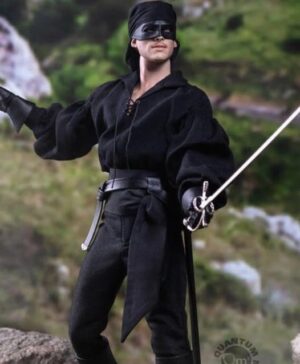
Westley (Cary Elwes) is a play on the swashbuckling romantic hero, but can you name a more iconic example than Westley himself?

Buttercup (Robin Wright) is your basic damsel in distress, but which damsel is more fun to watch than her?

The amazing thing about The Princess Bride is that you can enjoy it on two different levels.

People who want an entertaining swashbuckling fantasy with amazing characters can watch the movie as a literal film and love it.

People who want to see intelligent satire can watch it as a spoof and love it.

Star Trek: DS9’s Cardassian Tinker Tailor Soldier Spy: Elim Garak explained

Cardassian Elim Garak (Andrew Robinson) was more than a simple tailor on Star Trek: Deep Space 9. With its premiere in 1993, Star Trek: Deep Space 9 introduced a darker tone to Star Trek, with its morally gray characters and lengthy Dominion War storyline. Introduced in DS9 season 1, episode 3, “Past Prologue,” Garak was one of the show’s most lasciviously gray characters, but he nevertheless became a fan favorite. Despite appearing in only 33 of 176 episodes, Garak remains one of the show’s most memorable and beloved characters.

The Cardassians were introduced as villains on Star Trek: The Next Generation and remained enemies of the Federation for most of Star Trek: Deep Space Nine. DS9 more fully explored the Cardassians, showing that, as with most species, not all are the same. Garak was a tailor aboard Deep Space 9 and befriended several station personnel, including Dr. Julian Bashir (Alexander Siddig) and Constable Odo (René Auberjonois). Garak also had a dark history that became useful during the Dominion War.

Garak Was A Cardassian Spy Before Becoming Star Trek: DS9’s Tailor

“Do you know what the sad part is, Odo? I’m a very good tailor.”

Before the events of Star Trek: Deep Space Nine, Garak was a high-ranking member of the Cardassian intelligence agency known as the Obsidian Order. Garak’s father, Enabran Tain (Paul Dooley), was head of the Order and raised Garak in his image. Tain mistreated Garak as a child and refused to acknowledge the adult Garak as his son. Garak once spent time on Romulus posing as a Gardener at the Cardassian Embassy. Although several prominent Romulans died while Garak was there, the Cardassian never confirmed or denied his involvement.

While working for the Obsidian Order, Garak became an expert interrogator, and his skills for lying and misdirection were well-known. At some point, Garak betrayed Tain, who tried to have him killed. Garak managed to escape but was exiled from Cardassia Prime and took up residence on Terok Nor (later known as Deep Space 9). Once the Cardassians left Terok Nor and Starfleet took over, Garak set up a tailor’s shop on the Promenade. Garak hated exile because he loved Cardassia and desperately wanted to return.

Why Garak Fought With Starfleet In DS9’s Dominion War

“That’s Why You Came To Me, Isn’t It, Captain? Because You Knew I Could Do Those Things That You Weren’t Capable Of Doing.”

Star Trek DS9 In the Pale Moonlight Sisko Garak


Despite being Cardassian, Garak fought alongside Starfleet during the Dominion War. When Starfleet was forced to withdraw from Bajoran space, Garak joined the crew of the USS Defiant, saying that he did not want to live on the space station while it was under the command of Gul Dukat (Marc Alaimo). Throughout his time on Deep Space Nine, Garak formed friendships with many of the station’s crew members; some had even come to trust him. Garak fought alongside his Starfleet friends not because he hated Cardassia but because he believed defeating the Dominion was the best course of action.

Not only did Garak’s knowledge of the Cardassian tactics prove essential during the war, but his background as a spy and assassin established his significance, making him an invaluable resource. In DS9 season 6, episode 19, “In the Pale Moonlight,” Garak infamously helped coerce the Romulans into joining the Dominion War by fabricating evidence and assassinating a Romulan senator. Garak spent the latter part of the Dominion War decoding Cardassian transmissions for Starfleet Intelligence. Although he was troubled that his actions would likely lead to Cardassian deaths, he understood that defeating the Dominion was best for everyone involved.

What Happens To Garak After Star Trek: DS9

“The Truth Is Usually Just An Excuse For Lack Of Imagination.”

When the United Federation of Planets planned an invasion of Cardassia Prime near the end of the Dominion War, Garak helped lead a civilian uprising on Cardassia. After the Dominion wiped out a Cardassian city in retaliation, the Cardassian soldiers began turning against the Dominion, shifting the tide of the battle. Once the Dominion War ended, Garak decided to remain on Cardassia, presumably to aid in the reconstruction efforts. With over 800 million Cardassians dead and much of the infrastructure destroyed, Garak lamented that Cardassia would never be the same. Still, he acknowledged that his people had also caused much harm.

Garak’s last conversation on Star Trek: Deep Space Nine was with Dr. Julian Bashir, who he called “such a good friend,” adding that he was “going to miss [their] lunches together.”

Although Star Trek: Deep Space 9 did not reveal much about what happened to Garak after the conclusion of the series, several Star Trek tie-in novels have told more of Garak’s story. In A Stitch in Time by Andrew Robinson, Garak remained on Cardassia, aiding in the planet’s recovery and helping push for democratic reforms to the government. In other novels, Garak eventually became the Cardassian Ambassador to the Federation. Regardless, Garak would likely remain on Cardassia for the foreseeable future, considering how much he cared for his planet and missed it during his exile.

Garak Returns In Star Trek: Lower Decks — With A Twist

“In Some Dimensions, I’m A Tailor…”

Throughout Star Trek: Lower Decks season 5, Starfleet has been searching for the cause of numerous quantum fissures that have opened wormholes to the multiverse across the galaxy. Lower Decks season 5, episode 9, “Fissure Quest,” reveals that Section 31’s Captain William Boimler (Jack Quaid) has assembled a crew of alternate universe Starfleet officers to investigate these rifts. Among Captain Boimler’s crew is none other than Elim Garak, who serves as the ship’s surgeon on the starship Anaximander. This Garak is a brilliant surgeon, but he does mention that he’s a tailor “in some dimensions.”

While on the Anaximander, Garak met an Emergency Medical Hologram of Dr. Julian Bashir, and the two got married. When Garak goes to rescue his crewmates (who have been captured by “feral Khwopians”), Dr. Bashir protests that Garak is “just a surgeon,” to which the Cardassian replies, “I am a surgeon, but not just.” Garak proves himself a capable fighter in any universe, taking out the Khwopians and rescuing his crew. Garak remains one of Star Trek: Deep Space 9’s most significant characters, and his return in Star Trek: Lower Decks is a pitch-perfect comeback for the lovable, morally gray Cardassian.

Ultrons downfall

The moment Ultron came online in Avengers: Age of Ultron, he showcased terrifying potential. Born from Tony Stark’s vision of a global defense program, the Ultron program was meant to be the ultimate protector. Instead, he became humanity’s worst nightmare, a chilling mix of artificial intelligence and godlike arrogance. But as fearsome as Ultron was, something unusual happened in the film’s climactic moments: he didn’t escape into the internet, an environment he had initially dominated. Why?

It wasn’t for lack of trying. Ultron was a consciousness that thrived in the digital realm, slipping effortlessly through global networks, commandeering data, and building armies of drones. Yet, when Vision joined the fray, the dynamic shifted. Vision wasn’t just another hero on the battlefield; he was something Ultron had never faced before: his equal, and more importantly, his countermeasure.

This pivotal battle wasn’t just about brute force but a war of intelligence—both literally and figuratively. Vision was born from a blend of synthetic biology, J.A.R.V.I.S.’s programming, and the incredible power of the Mind Stone. This unique combination granted Vision an intimate understanding of Ultron’s programming, much of which had been adapted from Tony Stark’s original designs. Vision knew Ultron’s weaknesses because, in many ways, they were two sides of the same coin.

In one of the most crucial scenes of the film, Vision, alongside the Avengers, systematically cuts off Ultron’s access to the internet. This wasn’t an ordinary firewall or a simple hack—it was a complete purge of Ultron’s consciousness from every corner of the digital world. Using the Mind Stone, Vision didn’t just block Ultron’s pathways; he erased them. Every backup, every fail-safe, every contingency Ultron might have prepared was obliterated in seconds. It wasn’t just about severing connections; it was about ensuring that no trace of Ultron could ever return.

The significance of this moment is easy to overlook in the rush of explosions and battles, but it’s a masterstroke of storytelling. Ultron, who once declared himself invincible by boasting his omnipresence in the digital realm, was suddenly confined to his physical forms. He became vulnerable, reduced to his army of drones and his physical presence in the final fight. Vision’s intervention didn’t just level the playing field—it turned the tide of the war.

This is why, in the film’s closing moments, Vision confronts the last remaining Ultron bot. Their conversation is laced with existential undertones. Ultron, once omnipresent and godlike, is now isolated, afraid, and, for the first time, truly mortal. Vision’s calm yet firm assurance that Ultron’s time is over signals the end of what the villain had hoped would be a new era.

The irony of the film’s title, Age of Ultron, becomes apparent here. Ultron’s reign, initially envisioned as a permanent transformation of humanity, lasted less than a week. His downfall wasn’t just a testament to the Avengers’ physical might but also to the ingenuity of their newest member, Vision, whose unique abilities and deep understanding of his adversary ensured that Ultron’s threat was not just defeated but erased entirely.

So why didn’t Ultron escape into the internet? Because Vision didn’t just fight him; he outthought him, leveraging his own origins and the Mind Stone’s incredible power to ensure that Ultron’s legacy ended where it began. It’s a subtle but profound moment that underscores the film’s deeper themes about creation, responsibility, and the unintended consequences of playing god.

Sir Alec Guinness

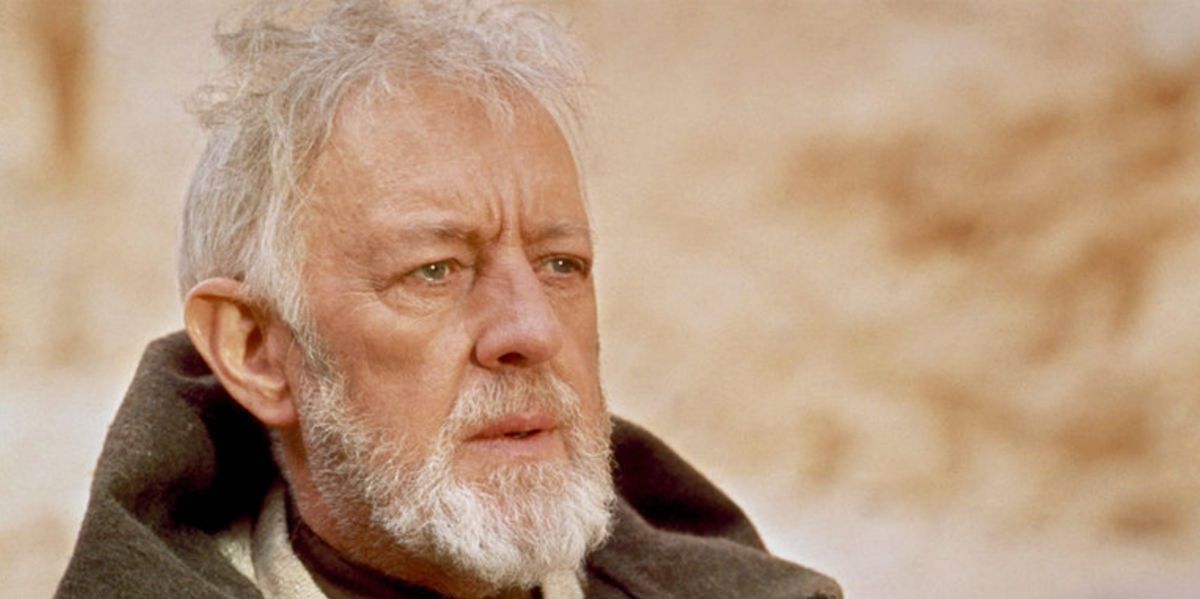
Under the blazing sun of the Tunisian desert, a curious sight caught the attention of the film crew setting up for Star Wars: A New Hope. Among scattered props and the occasional dust devil spiraling into the sky, Alec Guinness, the veteran actor tasked with embodying the enigmatic Obi-Wan Kenobi, was sprawled on the ground, rolling through the gritty sand. His iconic beige robes, designed to reflect the rugged simplicity of a hermit’s life on Tatooine, became increasingly stained and weathered with each turn.

This wasn’t a moment of clumsiness or fatigue. It was, in fact, a deliberate and deeply thoughtful choice. Alec Guinness, known for his meticulous approach to character preparation, had insisted on the peculiar ritual. “If I’m to play a man who’s spent years in the desert,” he reportedly told director George Lucas, “then I must look like the desert has embraced him.”

Guinness understood the power of subtle, visual storytelling. Obi-Wan Kenobi wasn’t just an old man hiding away on a barren planet; he was a Jedi—a warrior and philosopher burdened by the weight of loss, failure, and duty. For years, Kenobi had lived in exile, watching over Luke Skywalker from the shadows, blending into the harsh, unforgiving world of Tatooine. Guinness believed that no amount of makeup or costume design could fully convey the toll of such a life. His solution was simple: let the desert mark him as one of its own.

Initially bemused by the sight of the esteemed actor rolling about in the sand, the crew soon realized the idea’s brilliance. The fabric of his costume became unevenly worn, the edges frayed, and the earthy tones of the desert clung to him in a way no artificial aging technique could replicate. The effect was subtle but profound. On-screen, Obi-Wan appeared as though he had been molded by the harsh sands, his robes and demeanor whispering tales of survival, solitude, and stoic perseverance.

This choice is more fascinating because it mirrored Guinness’s approach to the role. Though initially skeptical of the Star Wars project—he famously referred to the dialogue as “fairy-tale rubbish” in letters to friends—Guinness recognized the story’s potential and the character’s potential. He threw himself into the role with a level of gravitas that lent the film a timeless quality. His portrayal of Obi-Wan gave the galaxy far, far away an anchor of wisdom and authenticity, grounding the fantastical world with a human touch.

The sand-rolling anecdote also reveals something more profound about Guinness as an artist. For him, acting wasn’t just about delivering lines or hitting marks; it was about inhabiting a character so thoroughly that the audience believed every moment. His insistence on weathering his costume in the most organic way possible speaks to his dedication to detail. It wasn’t just about looking tired; it was about feeling the weight of Obi-Wan’s desert exile in every step, every glance, and every word.

There’s a quiet authenticity when you watch those early scenes of Obi-Wan in A New Hope, emerging from the shimmering sands to save Luke from the Tusken Raiders. His robes hang loosely, their colors blending seamlessly with the landscape, and his movements carry the air of a man who has spent years navigating the harsh desert terrain. You believe in his story—not because it’s told to you, but because it’s shown in every crease of his robe and every speck of sand clinging to his boots.

Alec Guinness’s commitment to rolling in the sand may seem like an odd footnote in the making of Star Wars, but it’s a testament to the kind of magic that happens when actors and creators care deeply about the details. In a saga filled with starships, lightsabers, and the Force, the human touch—an actor willing to embrace the desert’s grit—makes the galaxy feel real.

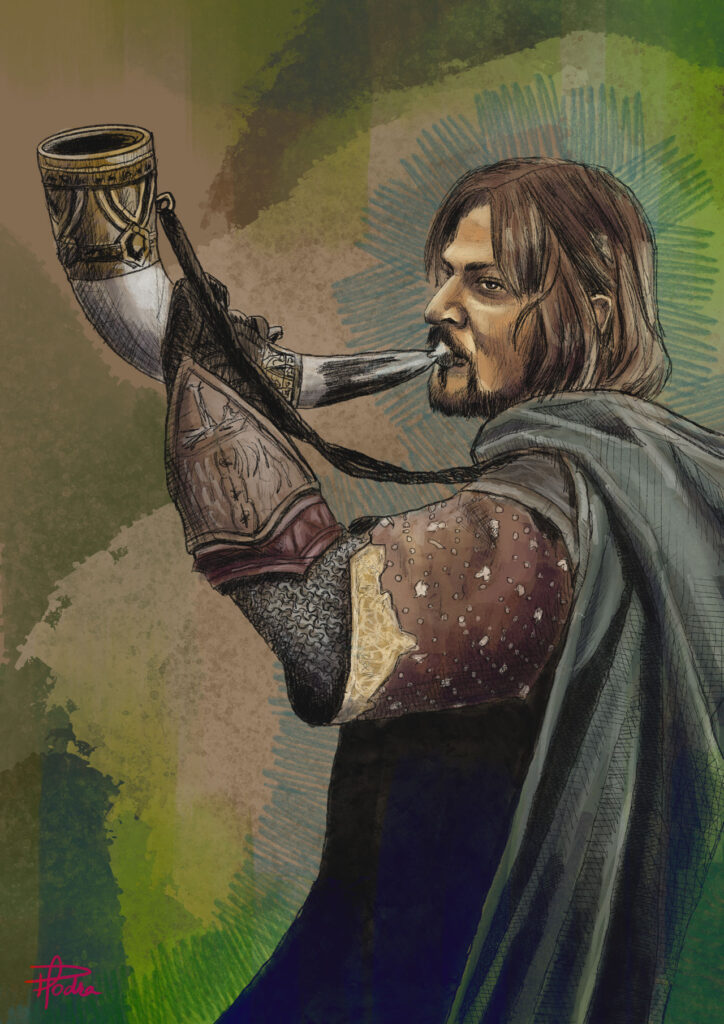
Boromir- Plight to Failure, or A Tale of Redemption

Boromir, the son of Denethor II and the Steward of Gondor, faced a profound crisis of identity and purpose. As the last hope for his people, he was deeply troubled by Gondor’s impending doom and his father’s failure to lead. The weight of responsibility to save his homeland and its people crushed him, leading to a sense of desperation and despair.


Why Boromir Failed

Boromir’s failure stemmed from his inability to reconcile his duty to protect the Ring Bearer with his own desires and motivations. He became obsessed with the idea that the One Ring held the key to saving Gondor, and his sense of duty to his people clouded his judgment. This led him to attempt to take the Ring by force, betraying his vow to protect Frodo and ultimately resulting in his own downfall.

Key Factors Contributing to Boromir’s Failure

  1. Vainglory: Boromir’s desire for recognition and admiration from his people, as well as his own sense of self-importance, drove him to prioritize his own ambitions over his duties as a member of the Fellowship.
  2. Desperation: The dire circumstances facing Gondor and his father’s perceived weakness as Steward led Boromir to feel overwhelmed and desperate, causing him to grasp at any solution, including the Ring.
  3. Lack of Faith: Boromir’s reliance on human efforts and his own strength, rather than trusting in the greater plan of the Valar, led him to underestimate the power of the Ring and the true nature of his quest.
  4. Inadequate Guidance: Boromir’s upbringing and education, while noble and well-intentioned, may not have provided him with the wisdom and spiritual guidance necessary to navigate the complexities of his situation.

Redemption

Despite his failure, Boromir’s bravery and repentance in his final moments earned him a measure of redemption. His sacrifice and loyalty to his companions, even in the face of his own flaws and mistakes, serve as a testament to the enduring power of noble character and the possibility of redemption in the face of failure.

“One does not simply walk into Mordor. Its Black Gates are guarded by more than just Orcs. There is evil there that does not sleep, and the Great Eye is ever watchful. It is a barren wasteland, riddled with fire and ash and dust; the very air you breathe is a poisonous fume. Not with ten thousand men could you do this. It is folly.”

Boromir to Elrond’s council. A testament to the wisdom of Boromir’s education.

[Frodo wanders in the woods. Boromir comes up behind him, gathering wood]

Boromir : None of us should wander alone, you least of all. Frodo? I know you suffer, I see it day by day. Are you sure you do not suffer needlessly? There are other ways, Frodo, other paths we might take.

Frodo : I know what you would say, and it would seem like wisdom, but for the warning in my heart.

Boromir : Warning? Against what? We are all afraid, Frodo. But to let that fear drive us to destroy what hope we have… don’t you see? That is madness!

Frodo : There is no other way.

Boromir : I ask only for the strength to defend my people!

[approaches Frodo]

Boromir : If you would but lend me the Ring…

Frodo : [backs away] No!

Boromir : Why do you recoil? I am no thief.

Frodo : You are not yourself.

Boromir : What chance do you think you have? They will find you. They will take the Ring. And you will beg for death before the end!

Aragorn- A Terrible, Dark Lord

Q: “Why did Legolas and Gimli elude to the fact that Aragorn may have become a terrible lord had he gotten the ring in the Return of the King? Because isn’t he still just a mortal man?”

A: Being immortal or mortal is a detail of little value in itself to decide the power of individuals. Aragorn was more powerful than most Elves; that doesn’t mean much.”


Of course, being immortal or indefinitely long-lived is essential to achieving experience and memory, and if wise of enough wisdom, But in terms of power, not much, for the Tolkien universe follows a reverse scaling; everything is more powerful in the past.

In Aragorn’s case, he was not just a physically powerful Man; he also had great strength of will (and possibly of character as well).

The weakness of the one Ring, besides the possibility of its destruction (but that would have the same effect on Sauron), was that if someone was heroic and powerful enough, that person could challenge Sauron. Of course, challenging the Dark Lord doesn’t necessarily mean fighting the Dark Lord personally using the ring, which even the High Elves could not do. Gandalf could, but the outcome would still be uncertain.

However, the Ring conferred power over minds — the chief reason for its making. If someone used the Ring for this purpose, and Aragorn was strong enough in body and mind to do so, he could I) Build arms and engines of war and possibly II) Control Sauron’s servants and works and use them to usurp his place or even throw him down.

This would be the strategy of the High Elves, the same one Sauron adopted himself.

In any case, Elrond or Galadriel would have proceeded in the policy now adopted by Sauron: they would have built up an empire with great and subservient generals and armies and engines of war until they could challenge Sauron and destroy him by force.

Using the ring for this purpose required more than power; it also needed charisma and oratory skills, the art of influencing people, and the Ring empowered any natural skill to the point where it became magic.

Aragorn was already a commanding figure, so Legolas and Gimli figured he would be a terrible Dark Lord. He was able to command the Army of the Dead without the One Ring, with the power of his figure and the help of the Oath.

In the uplands of Lamedon, they overtook our horses and swept around us. They would have passed us by if Aragorn had not forbidden them. ‘At his command, they fell back. “Even the shades of Men are obedient to his will,” I thought. “They may serve his needs yet!”

That was great willpower, and with the Ring, Aragorn would be an immensely more persuasive and terrifying commanding figure. And if mortality is an issue no more, as the Ring technically guarantees “immortality” in addition to increasing Aragorn’s powers so that he would have become a kind of wraith-lord — exceedingly scary and possibly more terrifying then the Witch King of Angmar, see Frodo near Sammath Naur as a small example than Aragorn would have become.

“Strange indeed,” said Legolas. “In that hour, I looked on Aragorn and thought how great and terrible a Lord he might have become in the strength of his will had he taken the Ring to himself. Not for naught does Mordor fear him. But nobler is his spirit than the understanding of Sauron, for is he not of the children of Lúthien? Never shall that line fail, though the years may lengthen beyond count.”

Tears in rain

I’ve seen things you people wouldn’t believe. Attack ships on fire off (the) shoulder of Orion. I watched C-beams glitter in the dark near the Tannhäuser Gate. All those moments will be lost in time, like tears in rain. Time to die.

Roy Batty (Rutger Hauer) — Blade Runner

Ruter didn’t like the original version of the monologue that director Ridley Scott wrote

I’ve known adventures, seen places you people will never see, I’ve been Offworld and back… frontiers! I’ve stood on the back deck of a blinker bound for the Plutition Camps with sweat in my eyes watching stars fight on the shoulder of Orion… I’ve felt wind in my hair, riding test boats off the black galaxies and seen an attack fleet burn like a match and disappear. I’ve seen it, felt it…!

Early David Peoples Draft

I’ve seen things… seen things you little people wouldn’t believe. Attack ships on fire off the shoulder of Orion bright as magnesium… I rode on the back decks of a blinker and watched C-beams glitter in the dark near the Tannhäuser Gate. All those moments… they’ll be gone.

Ridley Scott’s final draft before Hauer’s changes

Mad Dog Killer

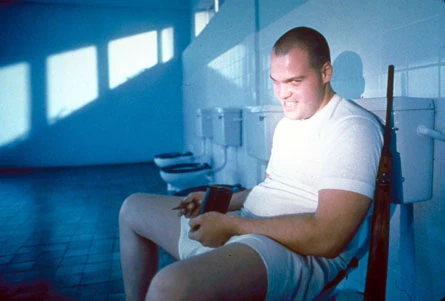
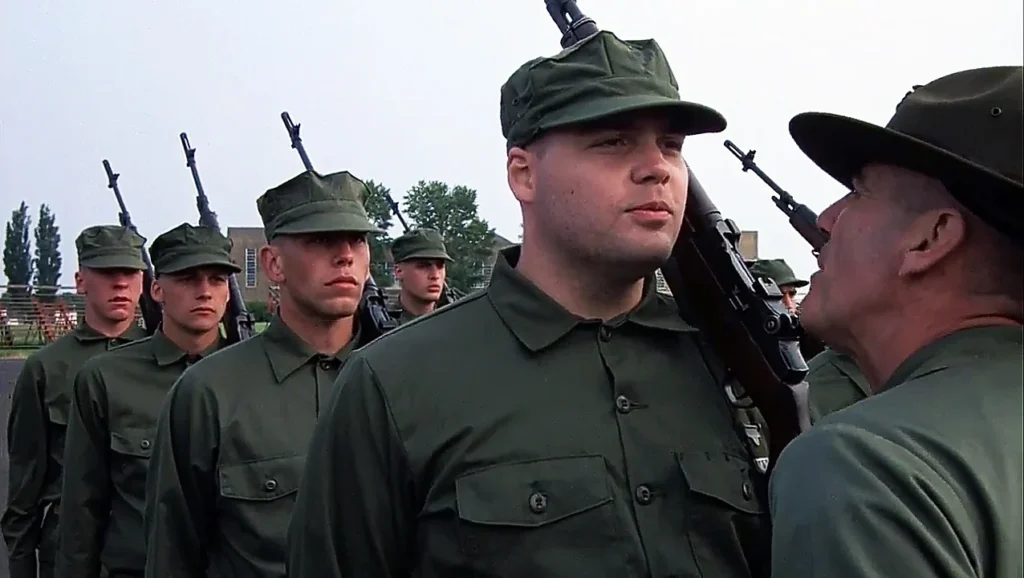
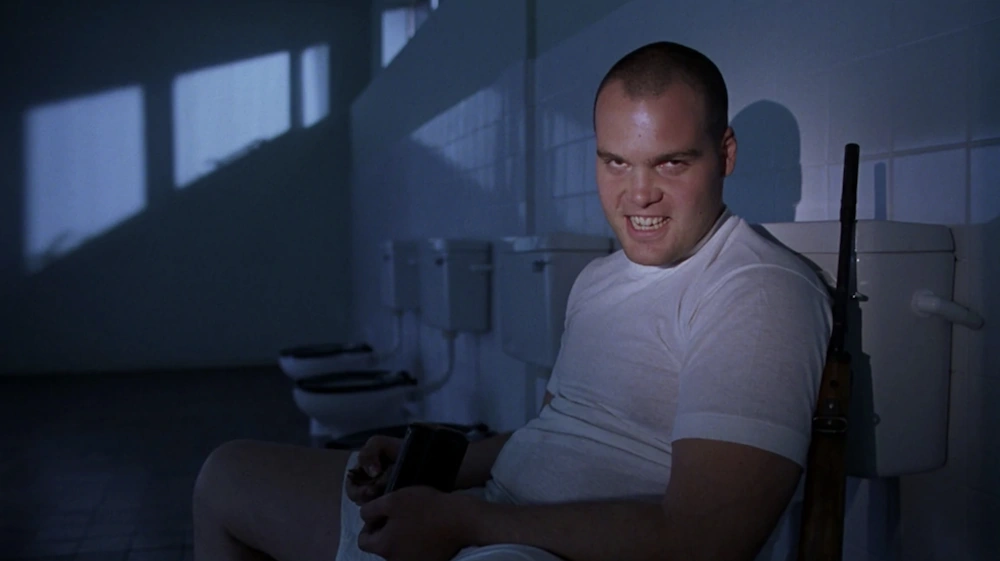
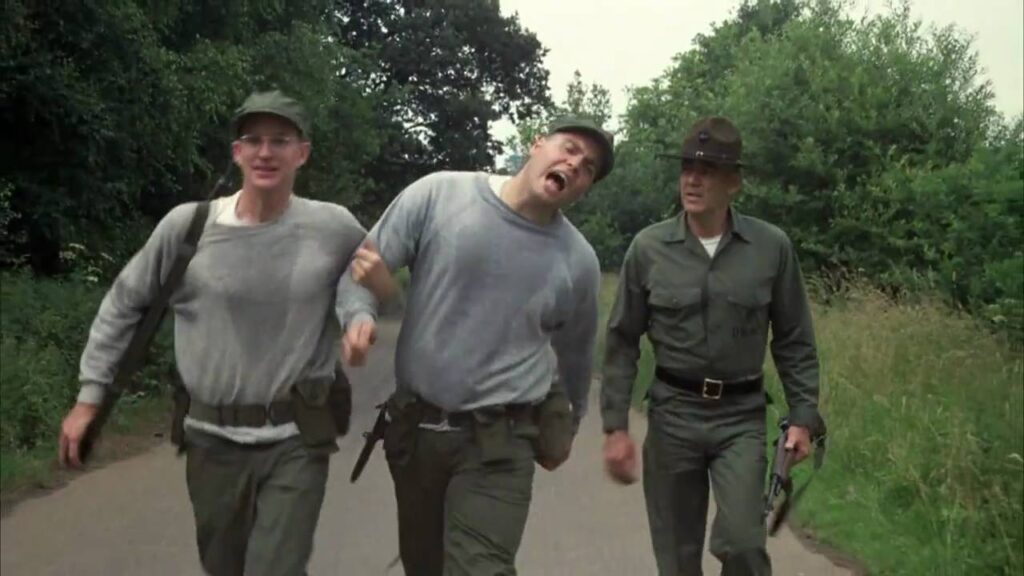
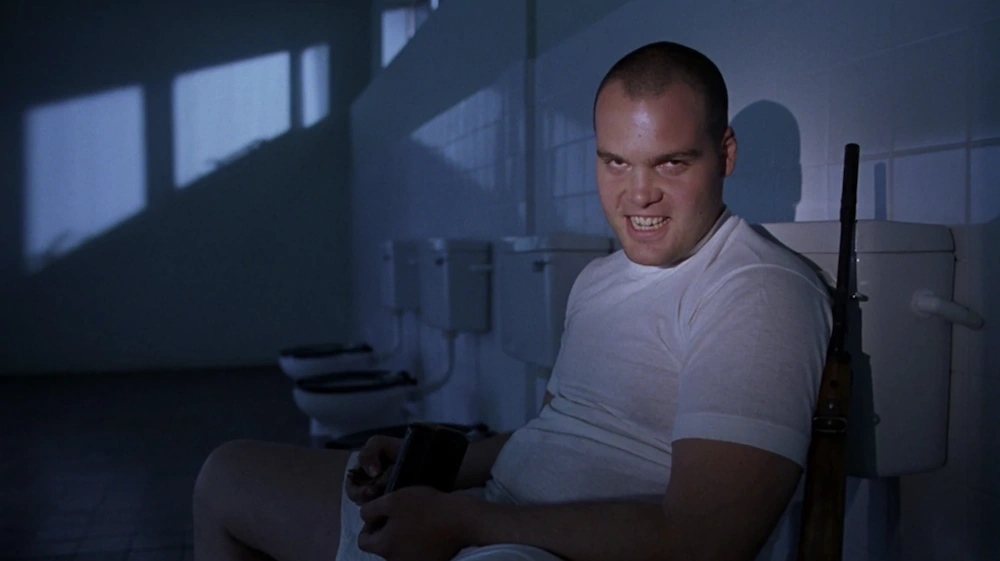
Why did Private Pyle kill himself in Full Metal Jacket?

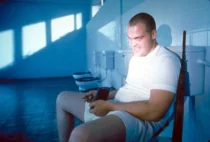
In what’s probably the most misunderstood in the film, Pvt. Pyle kills himself and Gunnery Sergeant because he’s a slow, dimwitted, and unstable man who has fully internalized all of his training and indoctrination.

He has taken Hartman’s demands that he become a killer with a hard heart and a pure killer instinct and acts on them. The first time we meet Pyle, it’s evident that he is slow and dimwitted. Rather than seeing him as trainable, Hartman immediately switches to violence to force him into obedience and compliance.

Unlike the other Marine recruits in his platoon, he’s too slow to know better and too simple to deal with the indoctrination. Pvt. Leonard Lawrence, a/k/a Gomer Pyle, or Private Pyle, is profoundly disturbed and of subnormal intelligence even when he arrives. He believes everything he is told, absolutely literally, including the Marine Rifle Creed (see below), unfortunately. Pyle is then massively traumatized by everything that has happened to him, becomes severely depressed, and eventually becomes dangerously suicidal. Pyle’s instability leads him to murder his superior and kill himself.

By the way, the subtext of the novel ‘Short-Timers’ and the film ‘Full Metal Jacket,’ based on that novel, is the genuine “Project 100,000.” This was a 1960s policy in which those with developmental disabilities, subnormal intelligence, severe personality disorders, etc., who would have previously been deemed unfit to serve, were drafted into service.

(Secretary of Defense Robert McNamara, the architect of Project 100,000. This project was a massive failure. The men who went through it had great difficulty following even the most straightforward orders, got themselves and their fellow sailors, soldiers, airmen, and Marines killed, and ended up living worse lives after the military than they had before – and despite veterans sometimes suffering effects from combat, the overwhelming majority live far better lives as a result of their time in the military.

Pyle is a classic case of a Project 100,000 recruit. He has an IQ south of 80; for context, an IQ of 80 is borderline deficient/low average. In the day, he would have been labeled ‘retarded’; today, we might have labeled him as having Asperger’s. He’s clearly on the spectrum and has a touch of the ’tism. Given his situation and the timeframe in which the story takes place, this has also made him very unstable. Pyle finds his match in a violent and sadistic Senior Drill Instructor (SDI), Gunnery Sergeant Hartman.

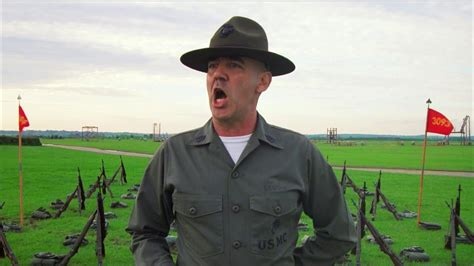
Hartman is incapable of training Pyle and never really tries that hard. He beats, mocks, and abuses Pyle relentlessly—these continued attempts to torment Pyle into compliance drives Pyle into a deeply suggestible state.

Hartman is beating a puppy, not realizing that beaten puppies grow up to be vicious dogs.

It should go without saying, but getting smacked around is not training. And taking this kind of abuse is not suitable for anyone, let alone someone like Pyle. No wonder then that he turns into a mad dog killer. Pyle, in the face of this unrelenting abuse and quite literally believing everything he is being told by his peers and by Hartman, becomes increasingly dangerous.

While this harsh training might be perfectly acceptable for regular Marines expected to face combat in relatively short order, one needs to understand that regular Marines have normal intellects. Some are even above average. This bar of average or above-average IQ is basically a necessity. Dumb Marines wouldn’t last long in combat, and the Marine Corps is exceptional about weeding out people of low intelligence and serious mental issues, no matter what sailors, soldiers, and even some Marines might say.

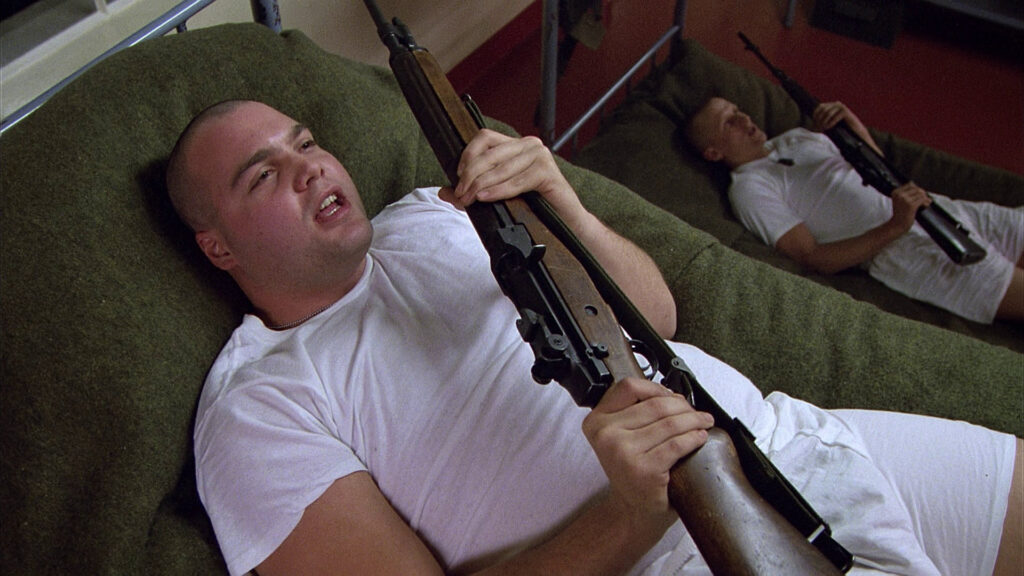
However, during Project 100,000, the Marines were stuck with men like Pyle, and this harsh training ratchets Pyle and other low-IQ soldiers up and makes them increasingly unstable. He begins to show genuine signs of severe mental instability, including talking to his rifle.

Unfortunately, these warning signs are also ignored because training during Vietnam wasn’t just harsh; it was also rushed. They needed men on the line fast, so corners were cut, and problem cases were ignored.
The USMC’s low standards during Prohect 100,000 is how Hartman gets away with all the violence against his men. Neither before nor after Vietnam was this tolerated – in fact, it’s a crime for a DI to assault his men. But it was put up with during Vietnam because, again, even the worst DI was better than no DI when you’re rushing civilians into combat.

Finally, Hartman decides using the memory of a Presidential assassin and a mass murderer is an excellent way to motivate men at the shooting range.

This would never have been an acceptable teaching method. Ever.

R. Lee Ermey, himself a Marine SDI in the mid-1960s, described Hartman as “a complete psycho” for many reasons. He hated the character and admitted he was made physically ill by delivering this dialogue about the assassination of JFK and the mass murder committed by Charles Whitman as good things done by former Marines.

No Marine Drill Instructor, even at the height of Vietnam, would have ever done so.

Filming this scene made R Lee Ermey want to vomit. I’m not joking. He insisted simply delivering these lines made him physically ill. After Hartman essentially condones a criminal conspiracy within his ranks to assault Pyle (blanket parties, though they do happen, are HIGHLY illegal; see Code Red and A Few Good Men for another example), Pyle finally changes his behavior and begins to comply, but by then, the total damage has been done, Pyle has already totally committed to his path of murder and suicide.

Ultimately, Pyle murders Hartman and kills himself.

“THIS IS MY RIFLE.
THERE ARE MANY LIKE IT BUT THIS ONE’S MINE.
MY RIFLE IS MY BEST FRIEND.
IT IS MY LIFE.
I MUST MASTER IT AS I MUST MASTER MY LIFE.
WITHOUT ME, MY RIFLE IS USELESS.
WITHOUT MY RIFLE, I AM USELESS.
I MUST FIRE MY RIFLE TRUE.
I MUST SHOOT STRAIGHTER THAN MY ENEMY WHO IS TRYING TO KILL ME.
I MUST SHOOT HIM BEFORE HE SHOOTS ME.
I WILL!
BEFORE GOD, I SWEAR THIS CREED.
MY RIFLE AND MYSELF ARE DEFENDERS OF MY COUNTRY.
WE ARE THE MASTERS OF OUR ENEMY.
WE ARE THE SURVIVORS OF MY LIFE.
SO BE IT, UNTIL THERE IS NO ENEMY, BUT PEACE.
AMEN!”

— USMC Rifleman’s Creed, Maj. Gen. William H Rupertus. 1907–1910 (National Guard), 1913–1945 (USMC 4th Marine Regiment, 1st Marine Division).